Mine Raider


The Treasure clause is a strict entry check, and its timing dictates everything about how you deploy the card. The trigger fires as the 3/2 arrives and asks a single question, checked both when it triggers and again on resolution: do you already control another outlaw? If yes, and the condition still holds, you get a Treasure; if not, nothing happens, and no outlaw played later retroactively pays out the token. That gating turns what could have been unconditional ramp into a reward for a board you have already committed to, since the outlaw batch (which pulls from several rogue-adjacent creature types) has to be satisfied at the moment the Raider enters. Give any red deck an unconditional Treasure and you hand it generic fixing; hanging the token on a creature already in play means the payout exists to compound a tribal plan and nothing else. Trample keeps the body relevant when the condition goes unmet: a 3/2 that pushes damage past a chump is an honest attacker on its own, so the card never becomes a dead draw when the second half stays dark. The reward structure nudges you toward sequencing, deploying the cheaper outlaw first so the Raider enters into an established batch, while asking nothing when you have not earned the payoff. It is a creature built to make you cast your outlaws in a specific order, wrapped around a body that still hits regardless.
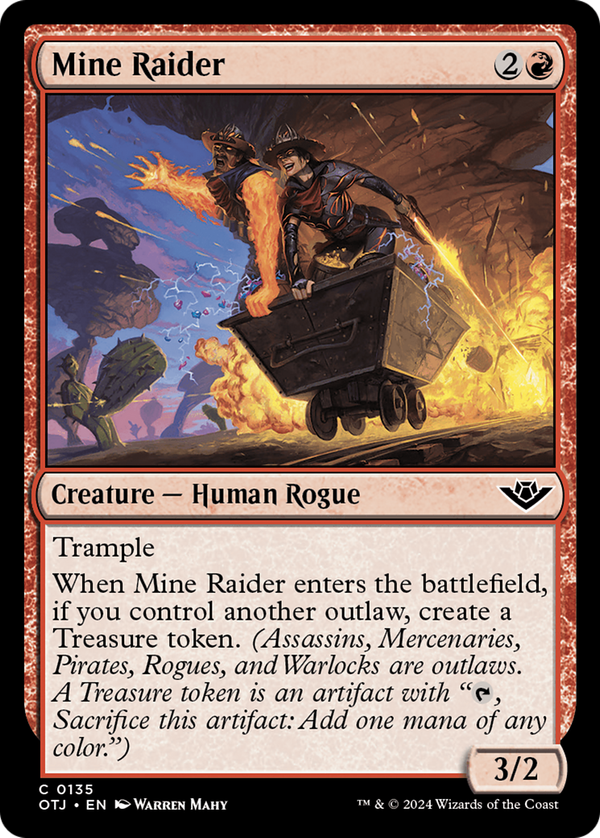
Rules text
 , Sacrifice this token: Add one mana of any color.")