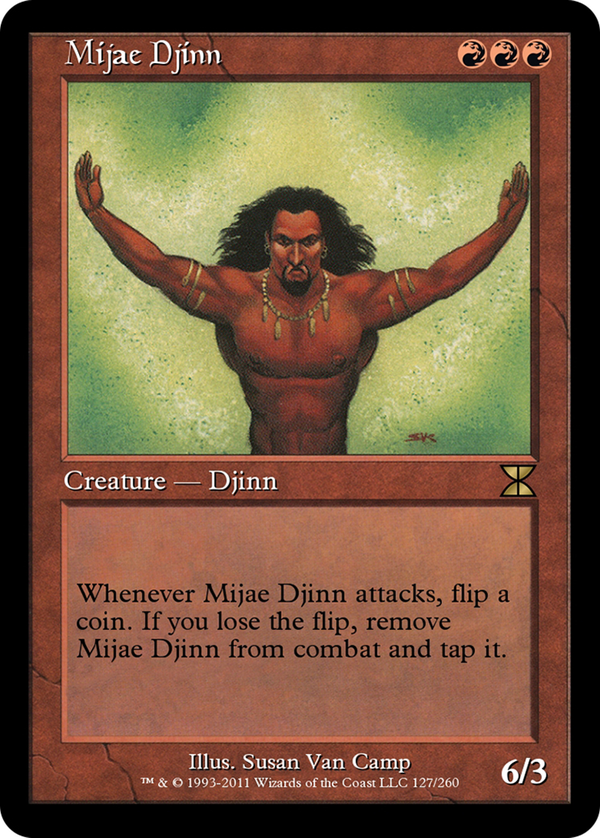
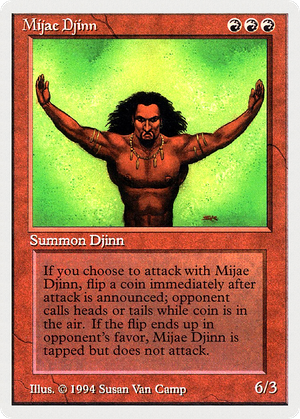
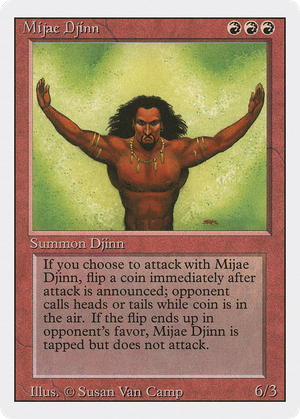
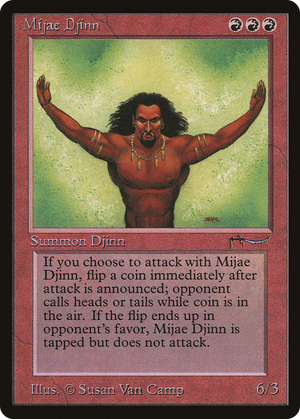
Mijae Djinn

A 6/3 body for was an unprintable rate when this Djinn first appeared, and the design paid for it with a coin flip every time the creature swung. That is the conversation worth having: variance priced as a cost, charged at the most consequential moment, the declare-attackers step. Most downside-on-a-beater designs since have folded the drawback into a static tax (echo, cumulative upkeep, entering tapped) or a triggered drain. Mijae Djinn instead gates the very thing you built it for. Lose the flip and the body still occupies the board, still soaks a removal spell, still threatens next turn; but the attack you committed to never happens, and any combat math that depended on it collapses. So you get a card that reads like a finisher and plays like a gamble, with the failure case carrying real tempo cost rather than a flat life or mana penalty. The flavor of a capricious djinn doing as it pleases is welded to the math: half your attacks are an empty action. The cycle it belongs to, with Ydwen Efreet on the defensive side, was an early attempt to push raw stats past the curve by attaching randomness rather than restriction, an approach the design team would largely abandon as the game matured and variance came to be understood as a cost players hate paying twice.