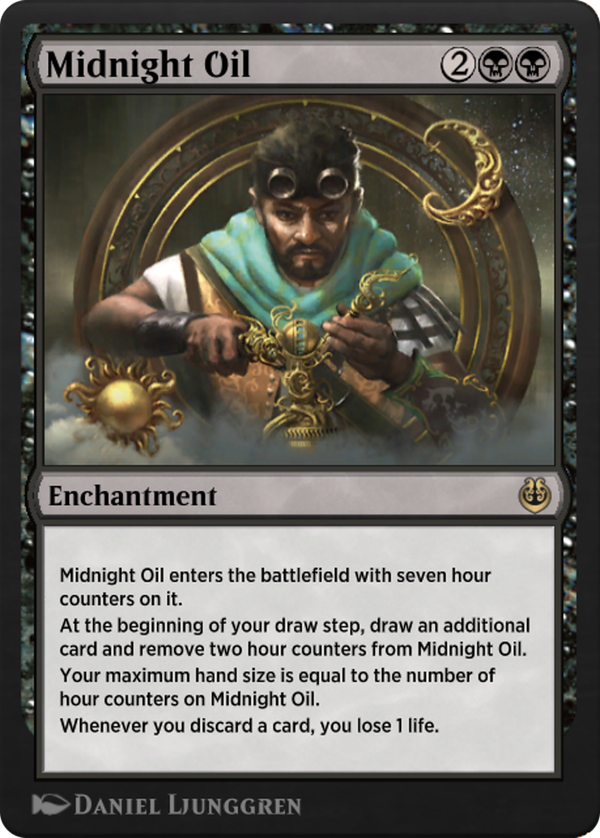
Midnight Oil


The clock is the card. Seven hour counters tick down two at a time, so the draw trigger fires four times before the counter reaches zero, and those same counters double as your maximum hand size. The engine eats itself by design: every extra card you draw shrinks the ceiling on what you are allowed to keep, so the resource that fuels the draws is the same leash that constricts them. Most card-advantage enchantments hand you raw cards and leave the cost abstract; this one wires the price directly into the mechanic, and it demands you spend the cards, not hoard them. The wrinkle is that the trigger does not stop when the counters run out. Once the hour count hits zero your maximum hand size is zero too, and the draw step keeps firing, so anything you draw and fail to play before cleanup gets pitched for a life apiece. That is the tension: the payoff was never the cards themselves but the tempo to deploy them, because holding is punished on both ends. Without ever changing a word of its text, it flips from a draw engine into a self-inflicted discard-and-burn tax that bills you for leaving it on the battlefield. The whole arc is self-terminating: a narrow window of free cards bracketed on the far side by an escalating life cost, daring you to cash in the gas and empty your hand before the meter reverses.