

The replacement clause is the engine, the 1/1 body is the price of admission, and TMT never hands green the second counter source that would make the engine hum. That gap defines the card here. The static needs an input, and the Mutagen token is the only guaranteed one: cast Michelangelo, sacrifice the token next turn for its own ability, the replacement bumps the counter to two, and you have spread a 3/3 across two turns. That trades with the format's common three-drops, the 2/3s and 3/2s, but it never gets ahead of them. With no second counter source on the board, the engine is a single one-shot upgrade bolted to a fragile body.
BG goodstuff is the home that wants the structure, around P1P6 to P1P8. The Mutagen reads two ways there, and they compete: spend it as written for a +1/+1 that the static turns into two, or feed it to a sacrifice outlet for the Food and sac subtheme's value. You pick one, because paying the token's own sacrifice cost and pitching it to an external outlet are the same body going to two different places. A sacrifice deck is happy to make that choice; a pure counters deck is not, because it only ever wants the counter. GU values him lower. It wants tempo and card flow, and a 1/1 needing a turn-three sorcery activation to matter does not pressure Foot Ninjas or Mechanized Ninja Cavalry the turn it lands.
The removal math is gentler than it looks because of the enter trigger. Stomped by the Foot or Grounded for Life on Michelangelo leaves you the Mutagen, so the opponent's removal spell is the one going down a card. Disappear shows up twelve times here, but bouncing Michelangelo cannot reach the artifact he already left behind. In green decks without a sac outlet, he is a cut, not a hold.
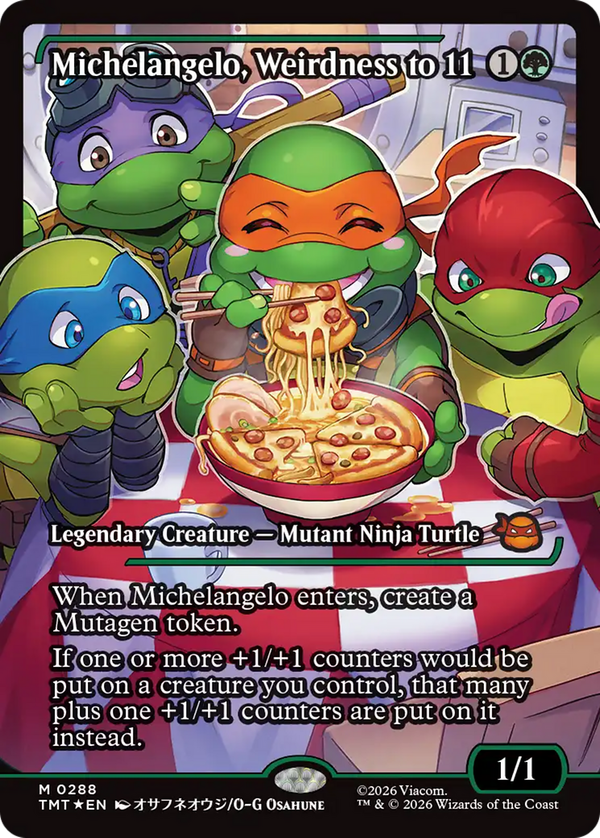
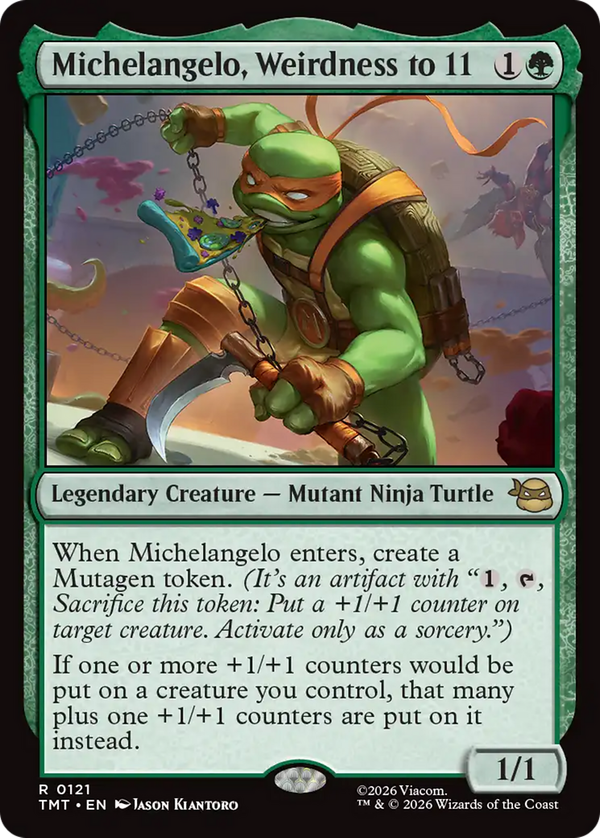
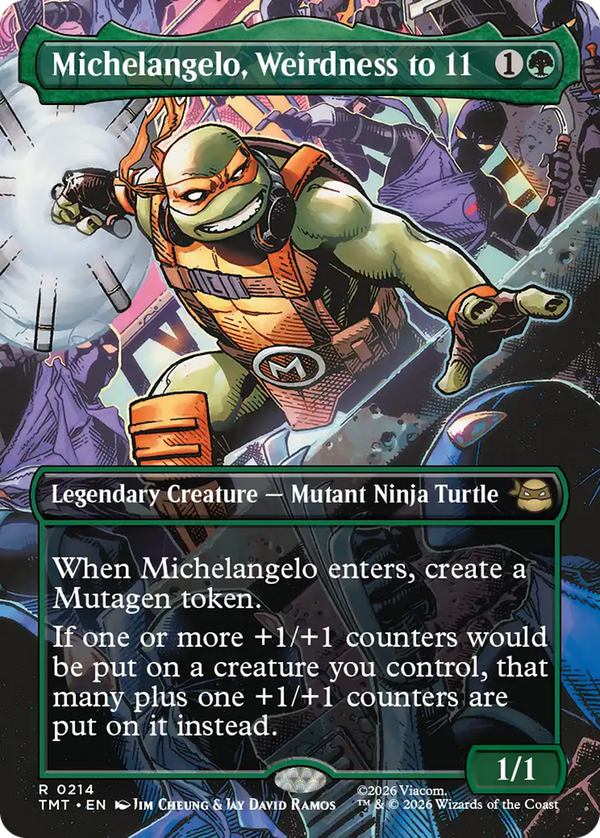
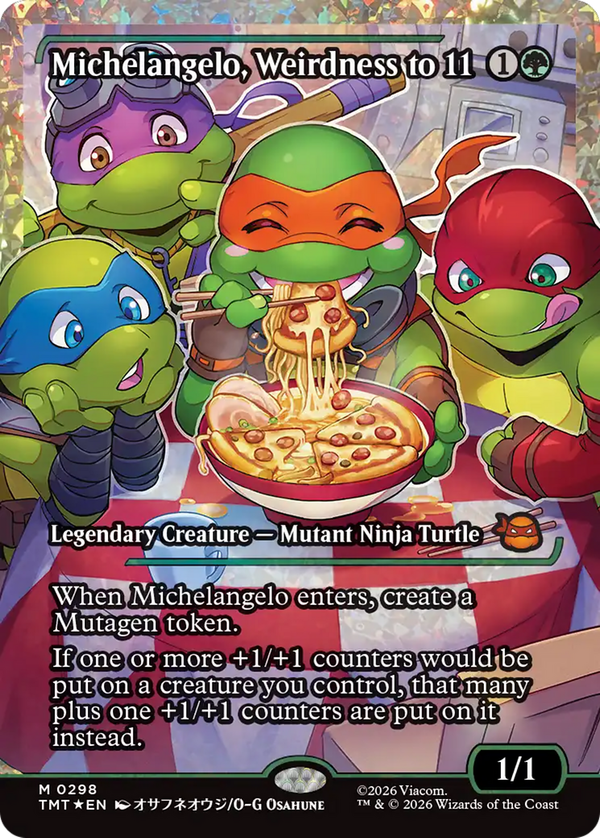
 , Sacrifice this token: Put a +1/+1 counter on target creature. Activate only as a sorcery.")
If one or more +1/+1 counters would be put on a creature you control, that many plus one +1/+1 counters are put on it instead.
, Sacrifice this token: Put a +1/+1 counter on target creature. Activate only as a sorcery.")
If one or more +1/+1 counters would be put on a creature you control, that many plus one +1/+1 counters are put on it instead.