Mesmeric Fiend


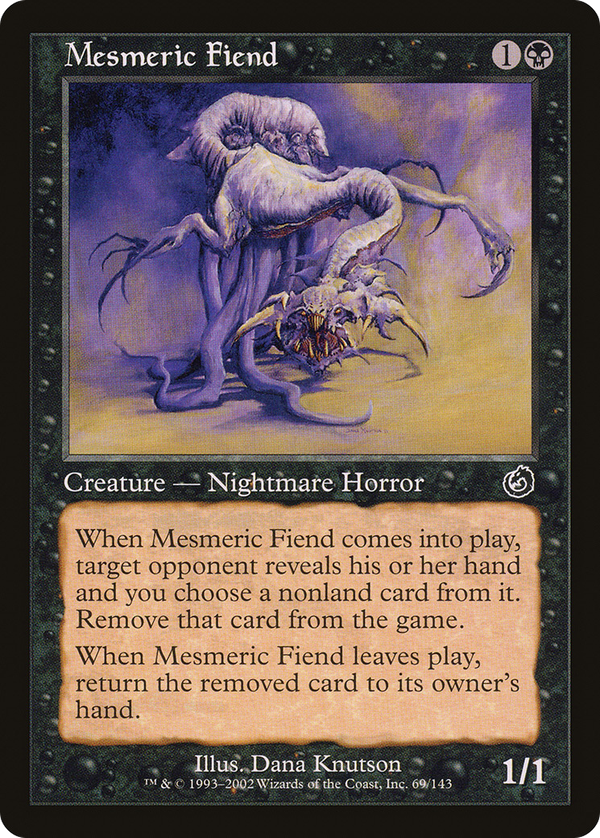
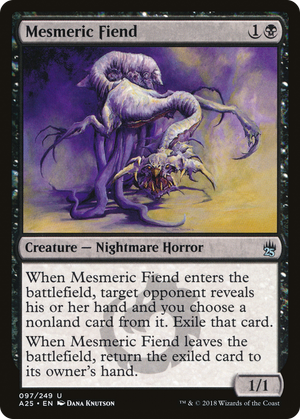
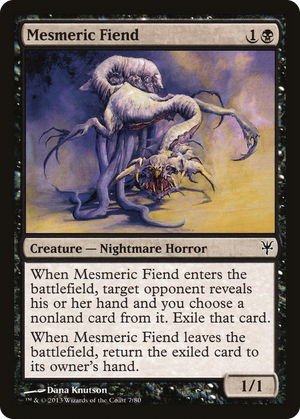
Hand disruption usually comes in two flavors: permanent, like Thoughtseize and Duress, which exile or discard a card for good, or temporary, which only delays. This sits firmly in the second camp, and its design tells you why that distinction matters. The exiled card comes back the moment the body dies, so the disruption is leased rather than purchased. That turns a 1/1 into a clock you must protect and your opponent must kill, which is a strange place for a hand-attack creature to live. The right read is not that you have stolen a card; it is that you have bought a turn or two, named a threat, and dared the opponent to spend removal getting it back. Played well, the exiled card is timed: you take the answer to your own plan, swing through the window, then accept its return once it no longer matters. Played carelessly, you are loaning the opponent a fresh draw the instant they Lightning Bolt your worst creature. The same temporary-theft skeleton shows up later in cards like Brain Maggot and Kitesail Freebooter, both refinements of exactly this trade. As the earliest clean version of the pattern, it established the central tension every successor inherited: the disruption is only as good as the creature's ability to stay on the battlefield.