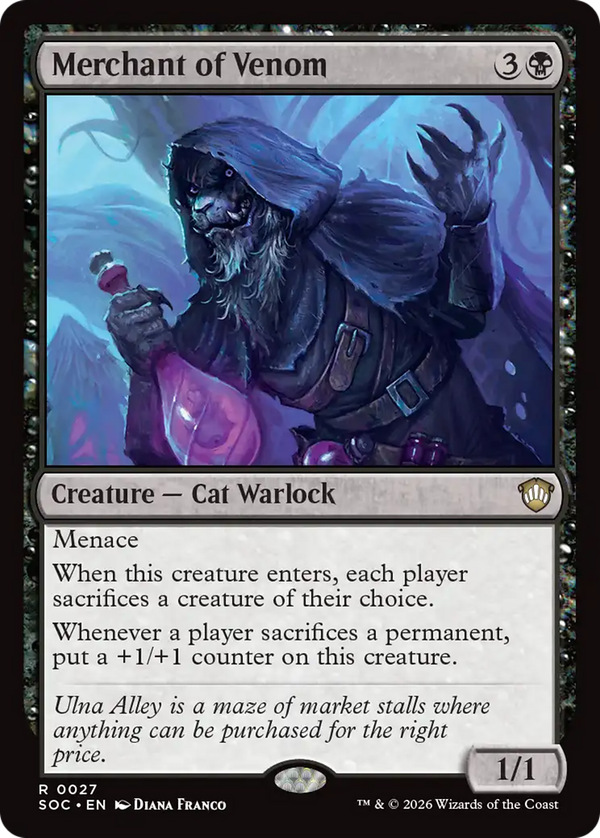
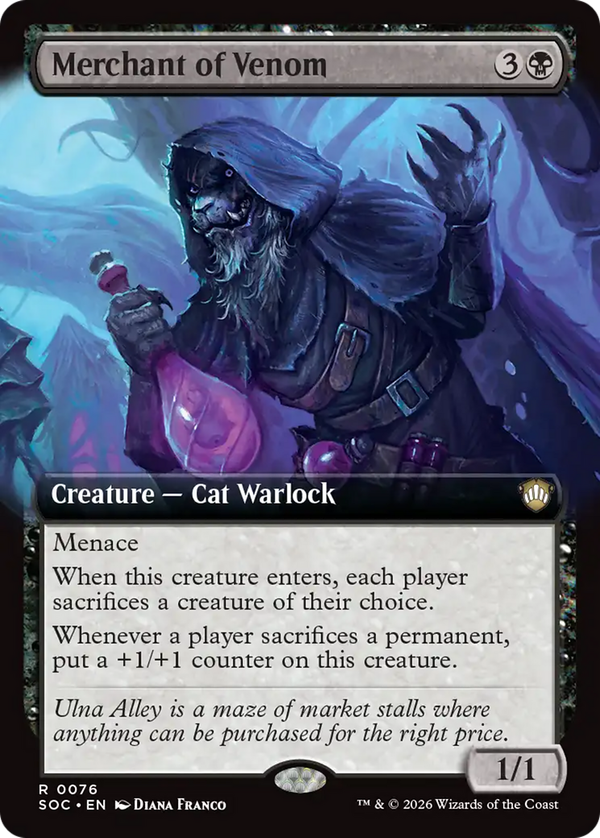
Merchant of Venom


The trick with a symmetric edict is who profits from it, and this one is rigged. The enter trigger forces every player, yourself included, to sacrifice a creature, which reads as fair until you notice the second ability: every sacrifice anywhere at the table, yours or theirs, feeds a +1/+1 counter back onto this body. The edict you cast becomes your own growth engine. A 1/1 that walks in and immediately eats a creature from each opponent is already a decent tempo swing; the counters mean the same symmetry that cost you a body on arrival pays you back on the way out. And the payoff scales past its own trigger, because it cares about any player sacrificing any permanent, not just creatures and not just the initial edict. Wherever the table is grinding through aristocrat outlets, treasure fodder, or fetch-style sacrifice effects, this quietly climbs the whole time, and menace keeps that growing body relevant as a clock rather than a wall. The design lives at the seam where a Fleshbag Marauder style edict meets a sacrifice-counter engine: one card that punishes the board on arrival and then converts the resulting attrition into its own size. The 1/1 base is the honest part of the deal, the tax that pays for turning a symmetric effect asymmetric. It wants a home already leaking permanents to the graveyard, and hands the reward to whoever built the machine doing the leaking.