Mental Journey


Six mana for three cards is a rate no deck would ever register a spell for; that number is deliberately steep, and the draw half exists mostly to be ignored. The real reason this design works is the  basic landcycling clause underneath it, which turns a dead six-drop in your opening hand into a two-mana fixing spell that fetches any basic and shuffles. What you actually put in a deck is a card that plays as a land early, when you want fixing and cannot afford to sit on a top-end draw spell, and unspools into a three-card refill later, when the mana is settled and extra cards matter more than extra land. This is the design logic behind cycling in general, pushed to one endpoint: bundle a flood-insurance policy and a payoff into a single slot, and let the board state decide which half you cash in. The two costs never compete on the same turn, so the card is never quite a dead draw and never quite a premium spell; it hedges into whichever mode the game is asking for. The high price on the draw is the tax you pay for that flexibility, tuned high enough that nobody hard-casts it for value alone. The card is a land that occasionally decides, in the late game, to be a draw spell instead.
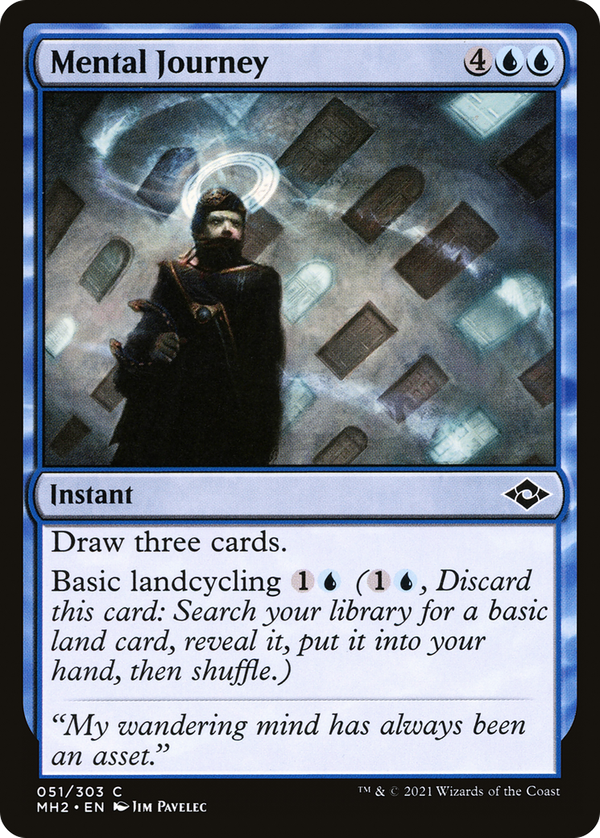
Rules text
(, Discard this card: Search your library for a basic land card, reveal it, put it into your hand, then shuffle.)