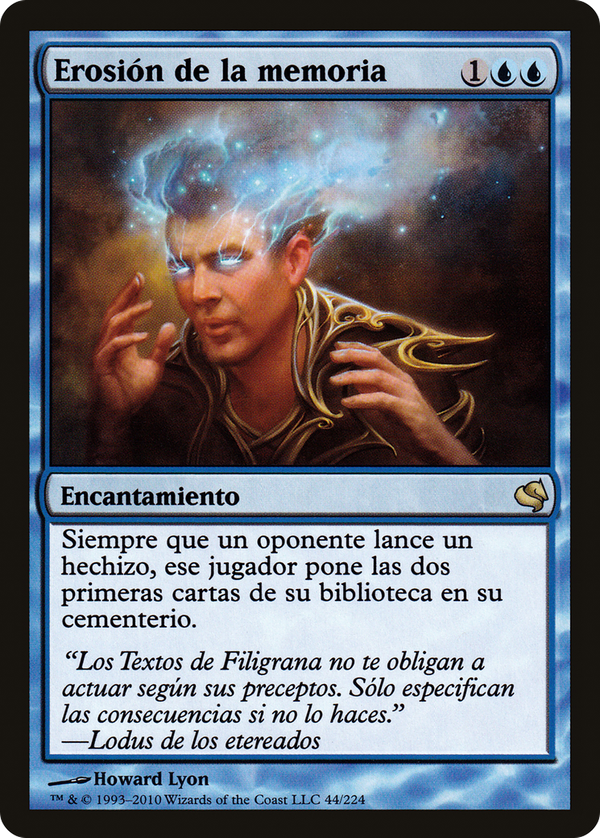
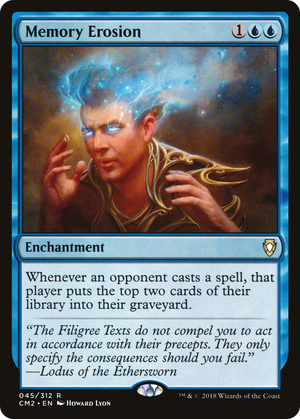
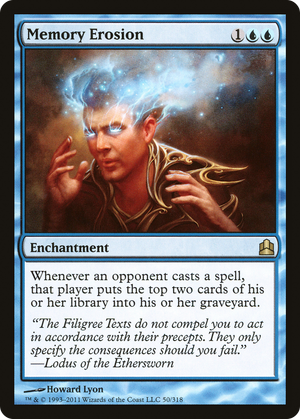
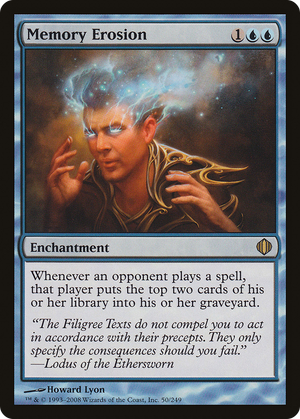
Memory Erosion


Mill decks have always wrestled with the same arithmetic problem: a library is sixty-plus cards deep, and chipping at it two at a time loses a race against any deck that just plays the game. The clever pivot here is taxing the opponent's own activity instead of running a fixed clock. The mill rate scales with how hard the other player is trying to win: every spell they cast to develop their board, dig for answers, or close the game also feeds their own graveyard, so the engine accelerates precisely against the decks built to go over the top of it. It punishes nothing and everything at once, asking no investment beyond resolving the enchantment and then sitting back while the opponent does the work. There is a catch that doubles as the design's sharpest edge: a passive opponent who durdles starves the engine to a trickle, but the more they commit to a plan, the faster the library drains. This is grindy enchantment-based mill at its most patient, the kind that turns an opponent's tempo against them rather than racing it, and it remains one of the more honest expressions of the idea: no triggers off your own spells, no upkeep upside, just a steady tax that bills the opponent for playing Magic.