Me, the Immortal




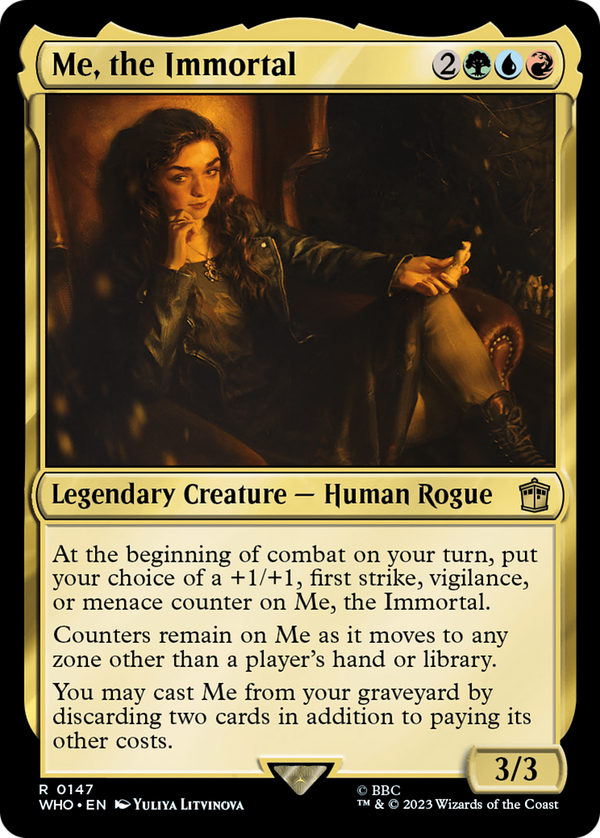
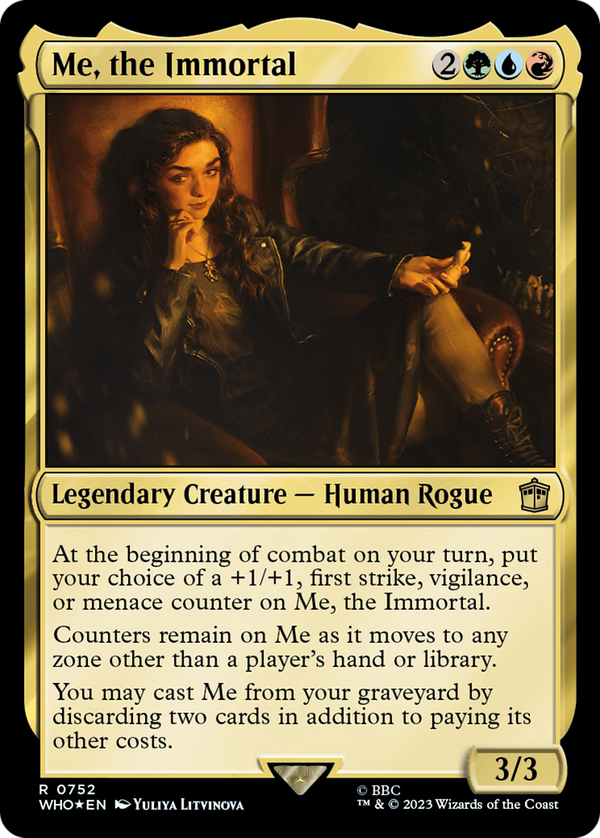
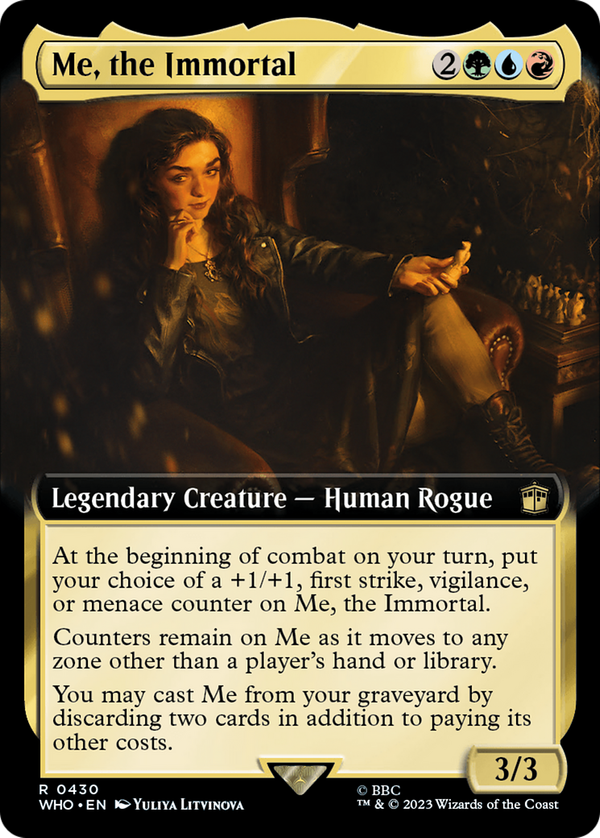
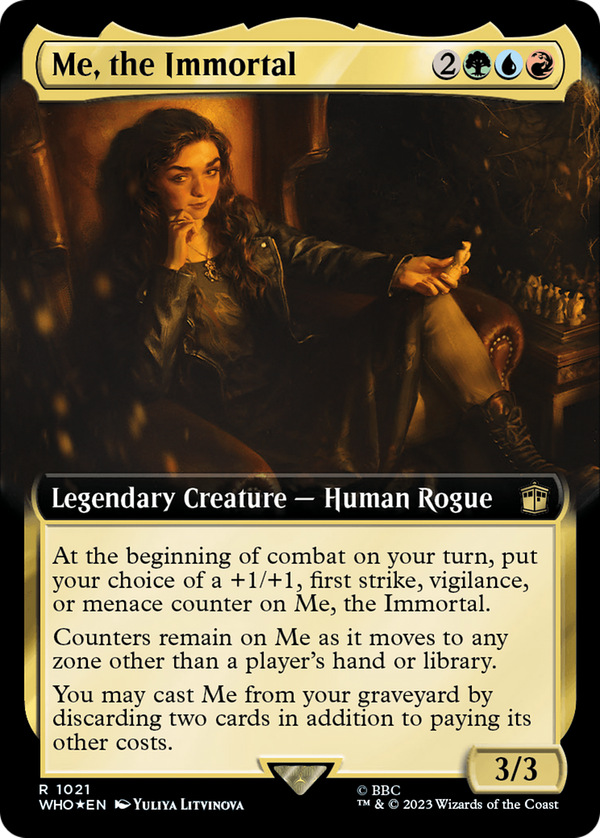
The counter-selection clause is the engine, but the second line is what makes it a threat that refuses to die: the counters travel with the creature into every zone except hand and library. Kill it, and whatever it accumulated (a stack of +1/+1s, first strike, vigilance, menace) waits in the graveyard for the discard-two recursion clause to bring it back with all that progress intact. Most incremental-growth creatures reset to their printed body the moment they leave the battlefield; here the investment is durable, which changes how both players evaluate a removal spell. Chump-blocking or point removal no longer erases the work, only delays it, and the third ability turns the graveyard into a launch pad rather than a dead end. The build-your-own-keyword menu is the flexible part: each combat you answer whatever the board demands, evasion against a stalled ground, first strike into a bigger blocker, vigilance to keep attacking while holding back. That flexibility is deliberately slow, one counter per combat, which is the friction that pays for the persistence. The design imagines a long game where the same creature dies and returns repeatedly, each death a checkpoint rather than a loss, so the value proposition is less about any single combat than about how much a single card can compound across a whole match.