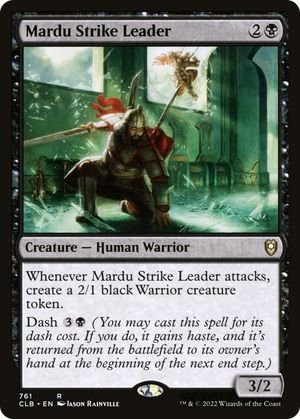
Mardu Strike Leader


The trick that makes the dash keyword more than a tempo gimmick is the attack trigger sitting underneath it. Most dashed creatures get one swing and go home, banking on the fact that you got value before they bounced. Here the value is the swing itself: every attack spits out a 2/1 Warrior, and a dashed copy still attacks the turn it lands, so paying the dash cost manufactures a body that stays behind after the leader returns to your hand. That turns a one-shot haste creature into a repeatable token engine, where the same card can be replayed across multiple turns and each replay leaves a permanent footprint on the board. The 3/2 frame is deliberately disposable; it is the chassis for the token, not the payoff. Against decks built to trade with the first attacker, the design punishes spot removal, because killing the leader after combat still leaves the Warrior, and bouncing it yourself is the plan rather than a concession. It reads as an aggressive curve-filler, but the structure is closer to a slow-burn aristocrats piece: a steady supply of expendable bodies that aggressive black wants for chip damage and sacrifice-leaning builds want for fodder. The dash cost is the governor on all of it, pricing each token-plus-attack cycle high enough that you cannot flood the board for free.
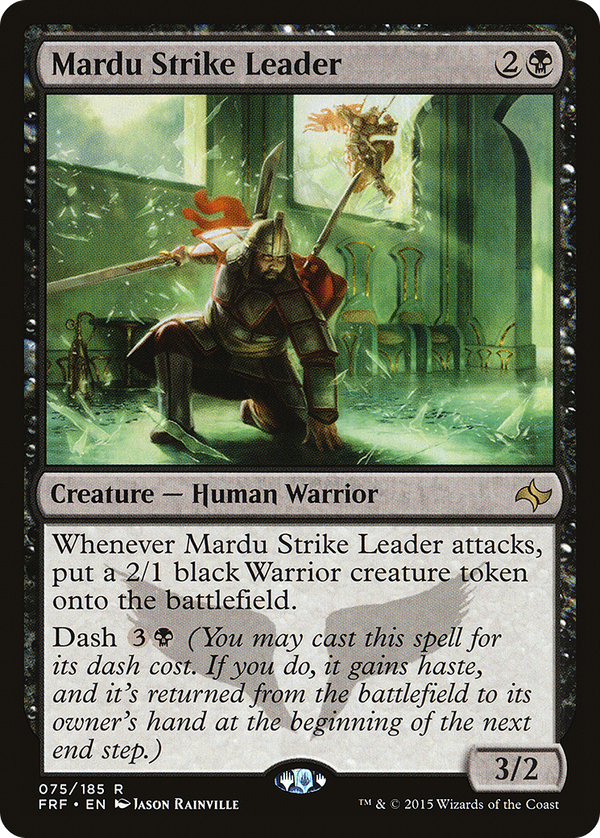
Rules text
 (You may cast this spell for its dash cost. If you do, it gains haste, and it's returned from the battlefield to its owner's hand at the beginning of the next end step.)