Mardu Banner

The clan-banner cycle solved an old multicolor problem with a single template: fix three colors now, and when the early-game smoothing stops mattering, convert the dead artifact into a card. Mana rocks that fixed multiple colors had existed for a long time, but the ones that didn't replace themselves became late-game blanks; you drew your fixing on turn nine and sighed. The banner's sacrifice clause is the answer, and the cost structure is what keeps it fair. Tapping for a single colored mana holds the rock honest as ramp, but the draw demands all three of the wedge's colors paid at once, plus the tap and the sacrifice. That requirement is not incidental: you only cash the banner in once your board already produces the colors it was helping you reach, so the card-draw rewards having stabilized rather than digging out of a stumble. The Mardu configuration sits in the most aggressive wedge, which sharpens the tension: a three-mana investment that produces no board presence and delays its payoff is a steep ask for decks built to attack, and the eventual cantrip rarely arrives fast enough to bridge the gap. The design is clean and the logic sound; the rate is simply a generation behind the signets and Talismans that do similar work for less.
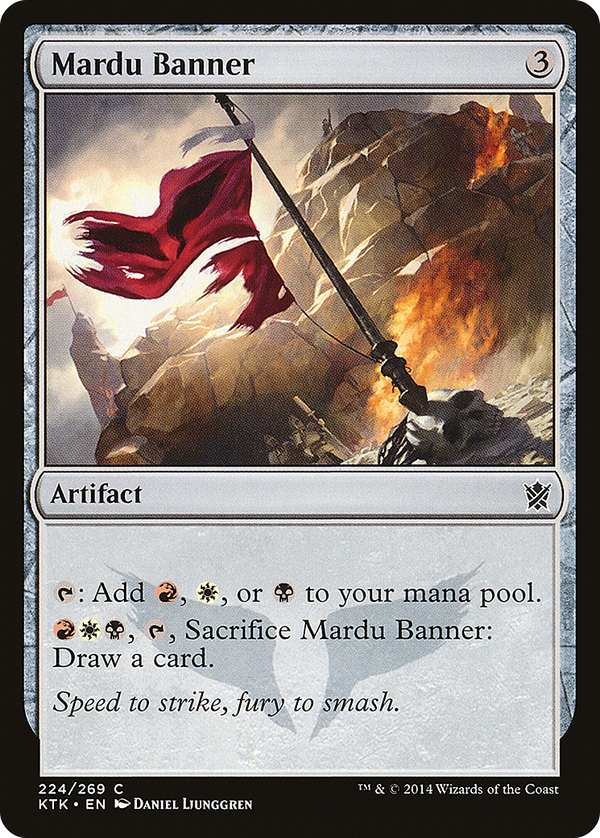
Rules text
 : Add
: Add  ,
,  , or
, or  .
, , Sacrifice this artifact: Draw a card.
.
, , Sacrifice this artifact: Draw a card.