Map the Wastes


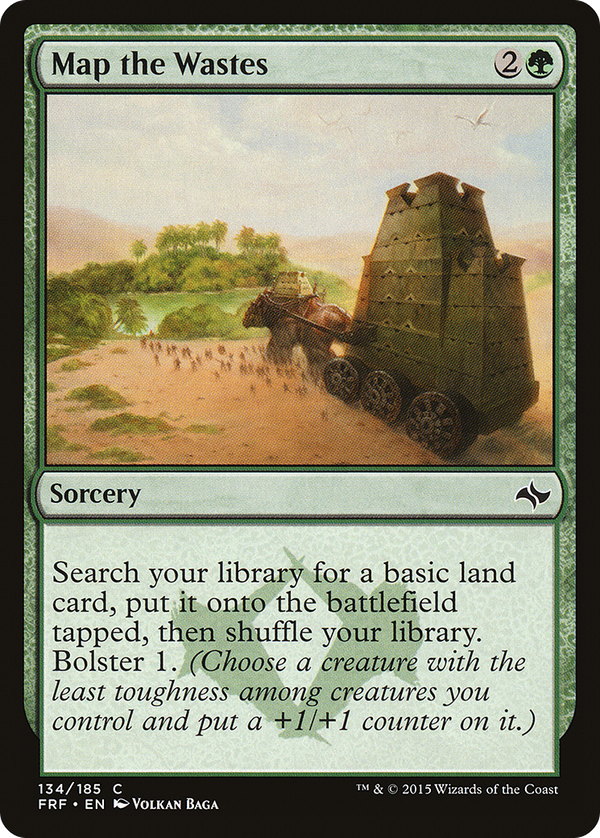
Rampant Growth fixes mana and stops there; this asks what else a green deck might buy with the extra mana value it costs. The split is the whole design idea: the same sorcery that fetches a basic also runs bolster 1, welding a +1/+1 counter onto the creature you control with the least toughness. That rider is what keeps a ramp spell from going dead in the late game, when you no longer need another land in play. And bolster's selection has a quiet logic to it: because it chooses rather than targets, it always finds your most fragile body, so with several small attackers or a spread of tokens the counter lands where it does the most good rather than piling onto a threat that is already large. Because it chooses rather than targets, protection from green and hexproof do nothing to stop it. Against its leaner cousin the tradeoff is plain: one more mana and slower ramp, in exchange for fixing plus a modest board-growth effect rather than fixing alone. It sits in the long line of green ramp spells that try to earn back their tempo loss with an attached bonus, and bolster gives that bonus a sturdier character than most: a counter fused to the creature, not a one-turn pump or a replacement card, a quieter and more permanent kind of value than fixing riders usually offer.