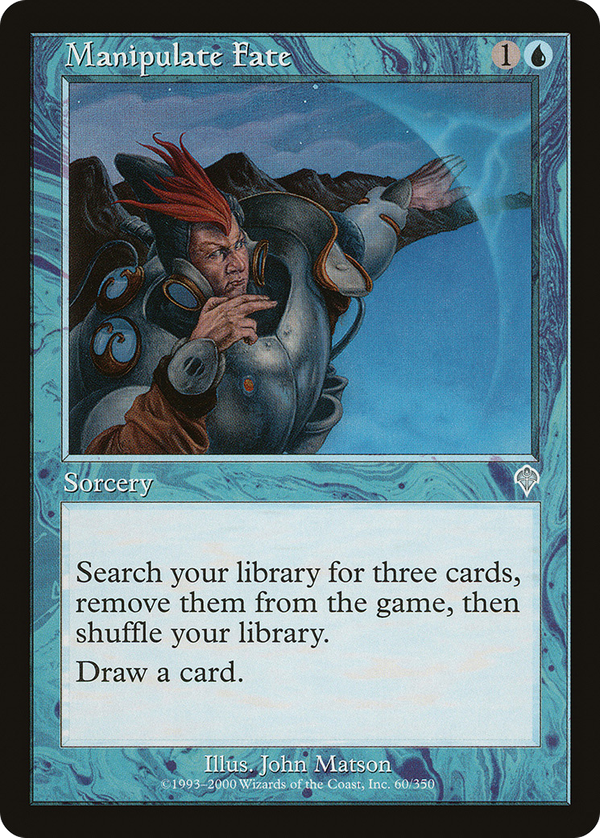
Manipulate Fate


The economy here is cleaner than it looks: spend one card from hand, draw one card back, and the spell breaks even. What it costs is not card advantage but library composition. The three cards you find are the three you exile, so there is no keep-versus-pitch sorting, only the surgical removal of three named cards from your deck forever. That is thinning in the most literal sense. Every draw afterward comes from a smaller, denser pool, because the chaff you exiled can never be drawn again, and the cantrip on the end keeps your hand size flat while it does the work. The exile clause is the entire design idea. It points the card at piles that know exactly which cards they never want to see: surplus lands once the count is hit, the second and third copies of a card you only need one of, the dead weight in a fragile engine that wants to topdeck its functional pieces. This is card quality bought with tempo, not card count. Against a grinding opponent, spending a turn to smooth future draws while developing nothing is a luxury few fair decks can afford, since the body of your deck stays the same size in hand even as the library improves. But the selection is total and the removal is permanent, which makes it a precision instrument for the deck that has a clear list of cards it would rather never draw.