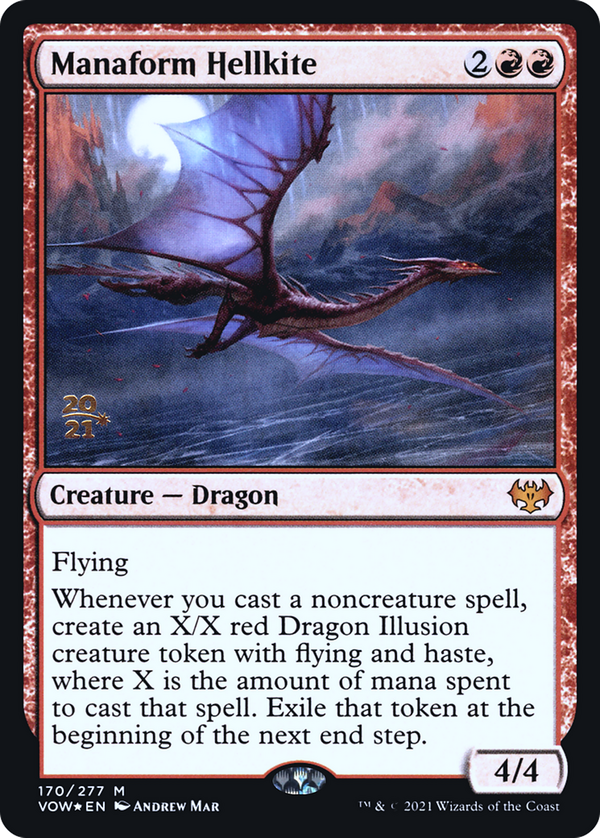
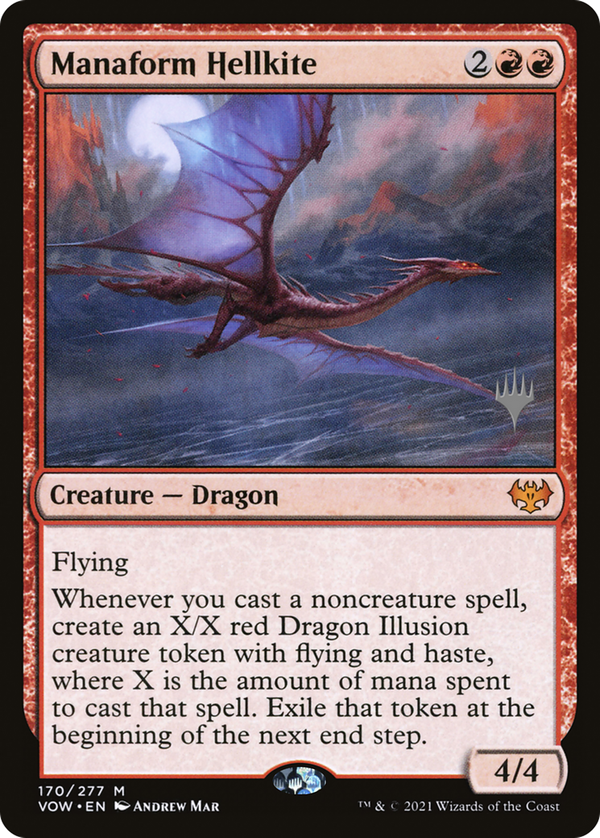
Manaform Hellkite


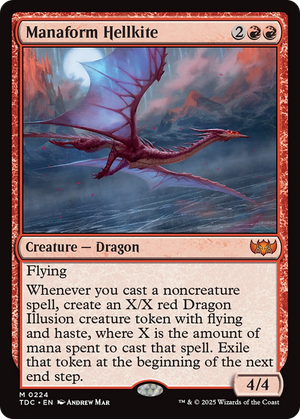
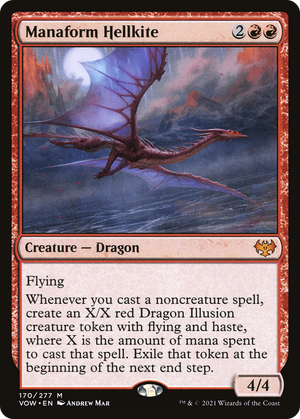
The token's size keys off mana spent, not the spell's printed cost, and that single word choice reshapes the whole build-around. Ritual mana and X-cost spells feed it directly: sink seven into a big sorcery and a 7/7 flier crashes in alongside it before evaporating at the next end step. The clause cuts the other way for cheap velocity, though. A cost-reduced or free spell spends little mana, so it makes a proportionally puny token, and a chain of one-mana cantrips produces a parade of 1/1s. That mismatch is the deckbuilding tension: you want a high volume of noncreature spells to keep the trigger firing, but the ones that matter in combat are the expensive ones, and few decks manage both. The haste-plus-end-step-exile clause pins the engine to a tight window: the token usually has to attack the turn it's made or it never attacks at all, which means the big payoffs come from spending big during your own main phase, before combat, rather than from most instant-speed casts on an opponent's turn that would fizzle the Illusion before you ever swing. The reward is measured in damage this turn rather than a standing board. The 4/4 flier underneath keeps the card threatening even in games where the trigger contributes almost nothing, but it only reaches its ceiling in a shell built to dump mana into one enormous pre-combat spell.