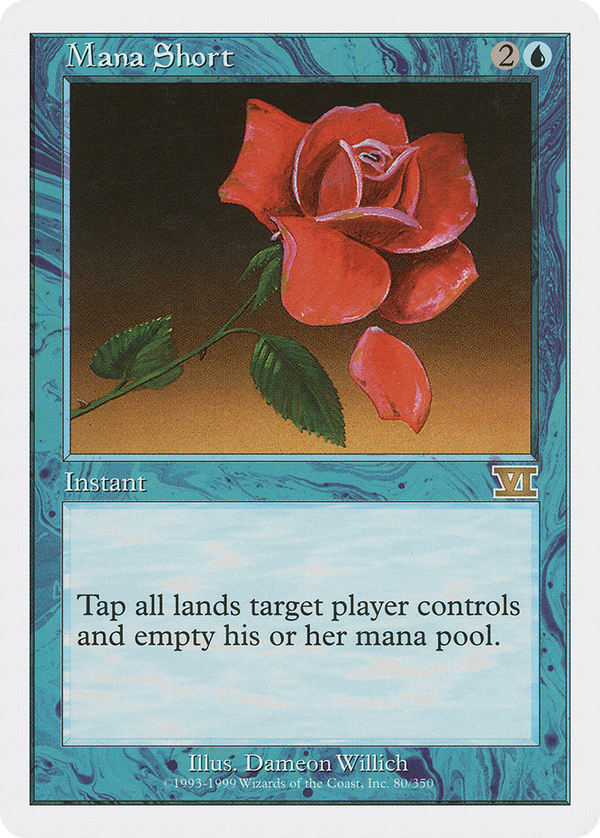
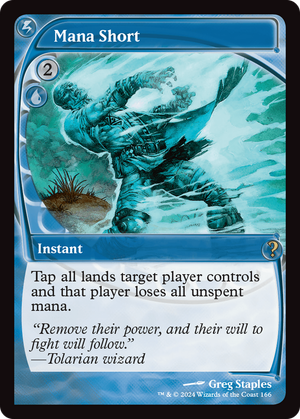
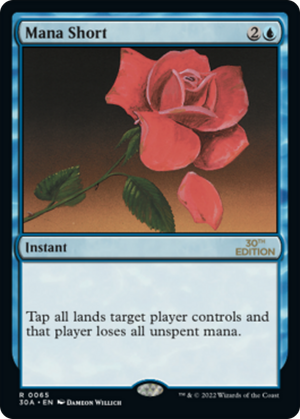
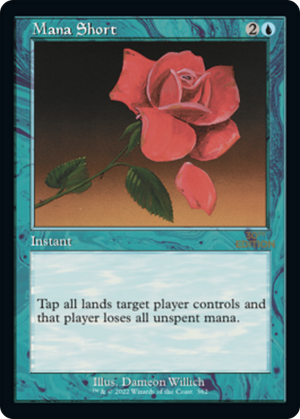
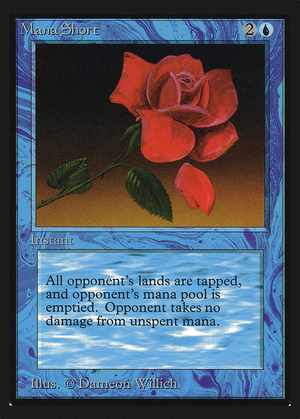
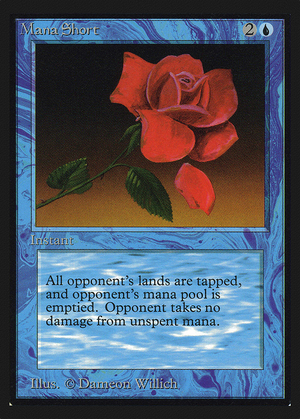
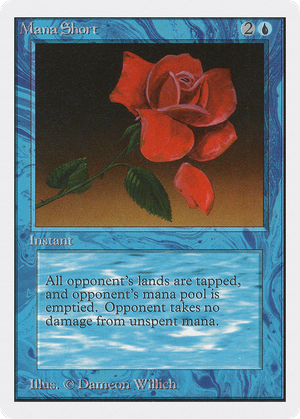
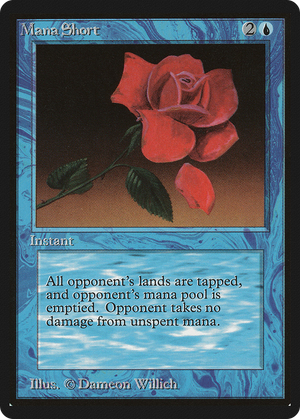
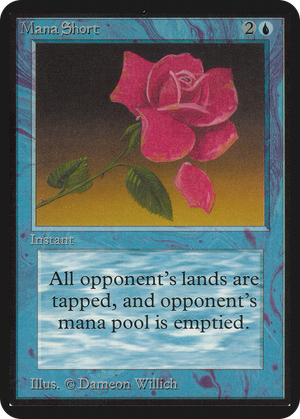
Mana Short


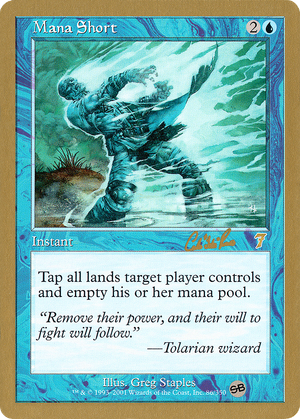
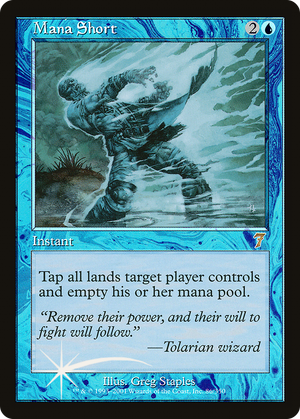
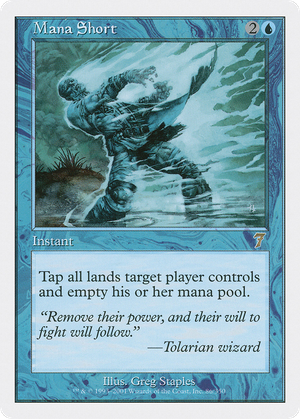
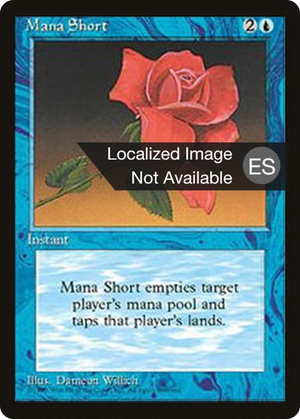
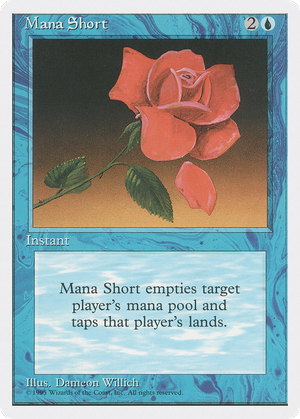
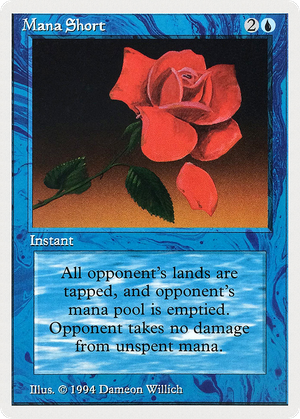
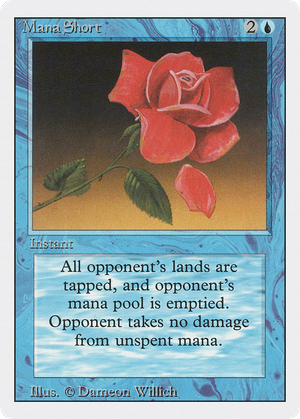
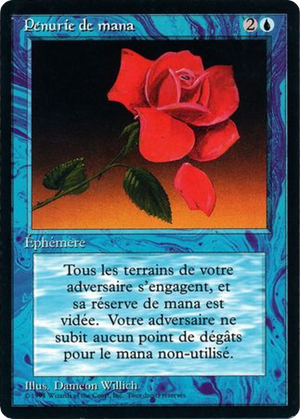
Tap all an opponent's lands and the lock lasts exactly one turn, expiring on their next untap step regardless: that, by itself, is a Twiddle with delusions of grandeur. The clause that makes the card worth the slot is the second one, the part that empties the unspent mana pool. Without it, a player simply taps everything in response and spends the floated mana before it ever evaporates, defeating the whole point. With it, a player who tapped out at end of turn cannot answer with what they had already produced. In an era of real mana burn and routine mana-floating into upkeeps (to pay cumulative costs, to bait counters), stripping the pool was a genuine tempo swing rather than a one-turn inconvenience. This is early blue's working definition of "denial": not countering the spell, but denying the resource that casts it. It sits among the small handful of early resource-locks that pointed at where blue tempo would eventually go, with Stasis as the more permanent expression of the same instinct. Mana Short has aged into curiosity rather than power, but the unspent-mana clause remains its load-bearing mechanic, a piece of rules plumbing the modern game rarely surfaces because so few cards still ask the question this one was built to answer.