Mana Matrix

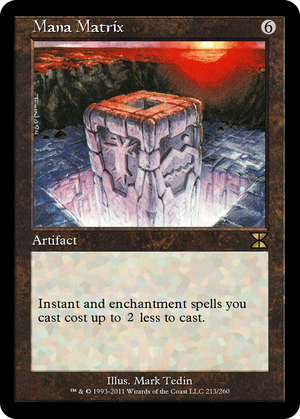
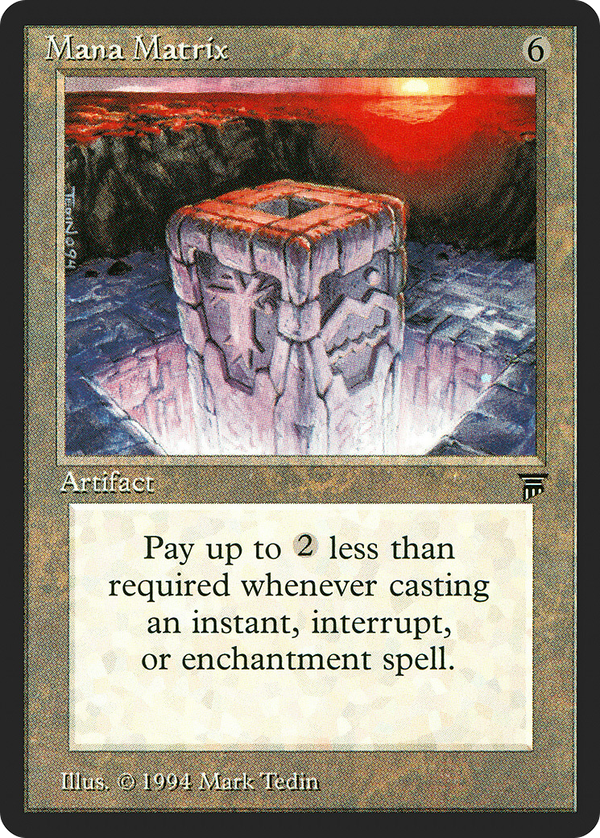
The cost-reduction artifact in its earliest, most awkward form. Reading the text today, the design instinct is clear: a build-around piece for control decks that wanted to chain counterspells and lock pieces across multiple turns, the spiritual ancestor of every cost-reducer that followed. The execution is where the card breaks down. Paying six upfront to save two on each subsequent spell means the artifact has to survive several turns of casting just to break even, and the discount only touches instants and enchantments, leaving creatures, sorceries, and your own artifacts at full freight. Compare the lineage that grew out of this idea: Helm of Awakening cut its own cost to three and applied to everything; Semblance Anvil traded a card up front for a permanent, type-locked discount. Each iteration learned the same lesson: a cost-reducer that costs more than it saves on its first spell is asking the deck to win a game it has already partly conceded. The card earns its place in design history precisely through that gap between intention and rate. The early artifact slot was still being calibrated, and the conservative pricing on a permanent that touches the mana system reflects a designer's caution about a mechanic that, sized correctly, would later define entire archetypes. The idea was sound a decade before the math was.
Rules text
 less to cast.