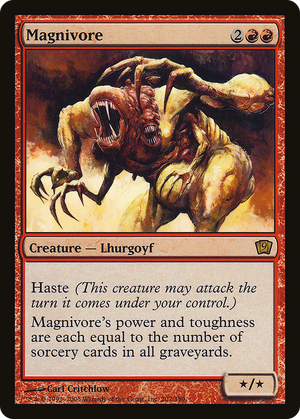
Magnivore


Most graveyard-matters creatures count your own discards or deaths; this Lhurgoyf instead reads every sorcery in every graveyard, which makes its size a referendum on how spell-heavy the table has been. The counting clause defines the whole archetype it serves: it was built for the control-and-counterspell shells of its era, where the plan was to answer threats with sorceries (Wildfire, the various sweepers and bounce spells) and let the discarded and resolved sorceries on both sides of the board feed a creature that swings with haste the turn it lands. The result is a beater whose power lives outside the deck running it; an opponent leaning on their own sorceries is, structurally, building your clock for you. The catch is that the count is alive: an empty graveyard of sorceries leaves a 0/0 that never survives, so the card is hostage to a game state it can influence but not control. It descends cleanly from the Lhurgoyf template established by the namesake creature counting creatures in graveyards, taking that existing dynamic-power chassis and pointing it at a single, narrow card type. The narrowness forces it into build-around territory rather than letting it pass as a generically good four-drop. You do not splash Magnivore; you assemble a game plan that makes sorceries pile up and then cash the haste in for a quick, board-dependent finish.
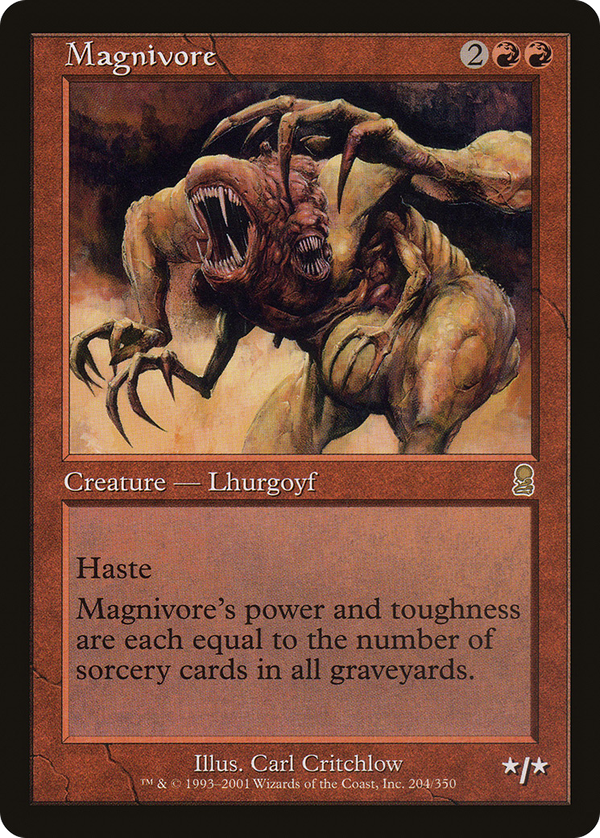
Rules text
 as soon as it comes under your control.)
Magnivore's power and toughness are each equal to the number of sorcery cards in all graveyards.
as soon as it comes under your control.)
Magnivore's power and toughness are each equal to the number of sorcery cards in all graveyards.