Mages' Contest


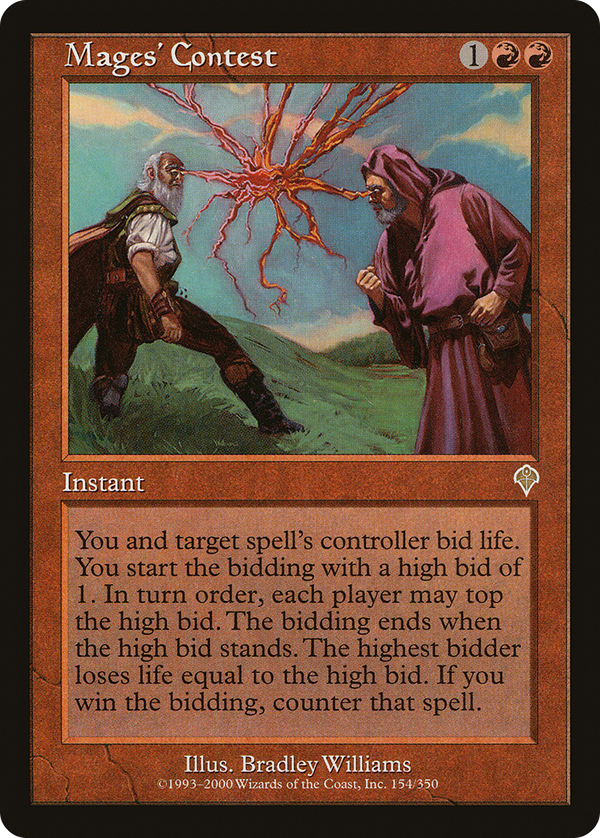
Counterspells normally settle as a binary: you have the mana untapped or you do not. This one converts the question into an auction paid in life, where both players can see exactly what stopping the spell is worth to the other side and have to decide whether the answer is worth dying a little faster. The opening bid of 1 is almost a formality; the tension lives in the escalation, because every counter-bid commits a player to a number they cannot walk back, and only whoever holds the high bid when the auction ends actually pays it. That single payment is the lever the whole card swings on. The caster who wins the bidding pays the life and gets the counter. The controller who tops the final bid keeps their spell live but pays for the privilege out of their own life total. The trap is that the caster who initiated the auction can talk themselves into a number they had no business reaching, then back off and watch the spell resolve anyway, having spent nothing but the read. It rewards the player who treats life totals as the resource they actually are and punishes reflexive bidding from anyone playing this like a normal counter war. The design sits with the early-era cards that treated life as spendable currency rather than a clock: a high-variance political instrument that asks both players to put an exact price on a single moment and live with the number.