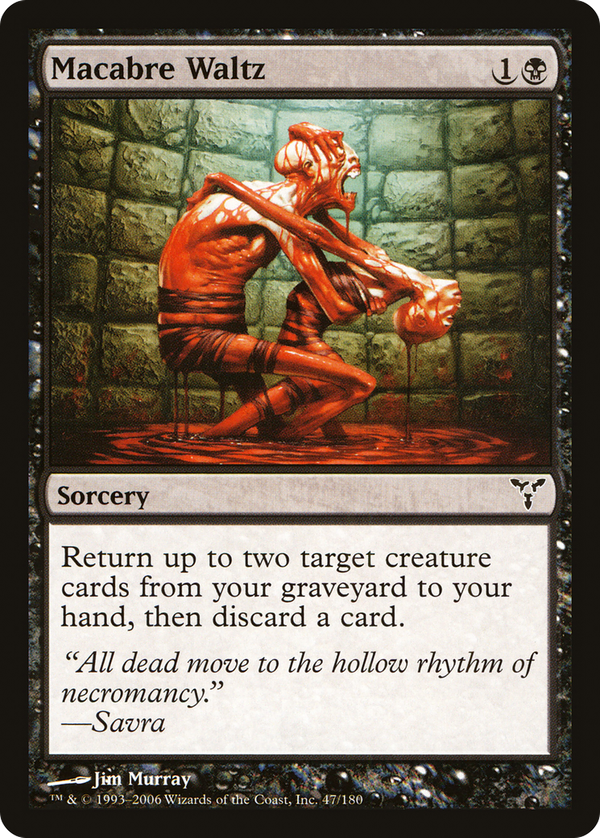
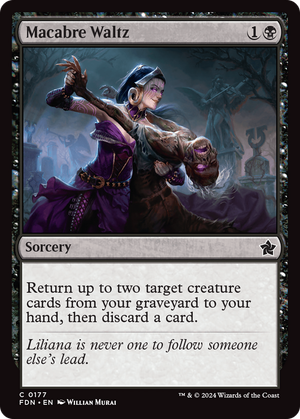
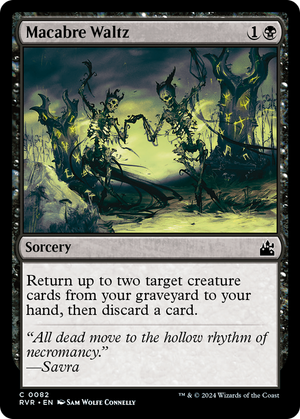
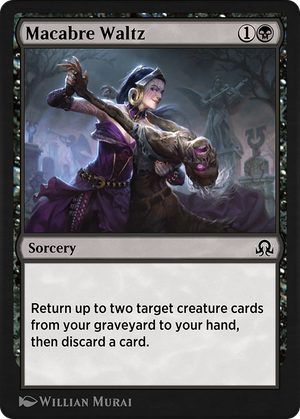
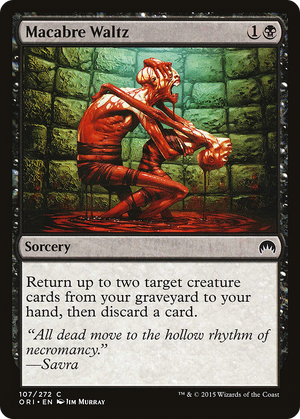
Macabre Waltz


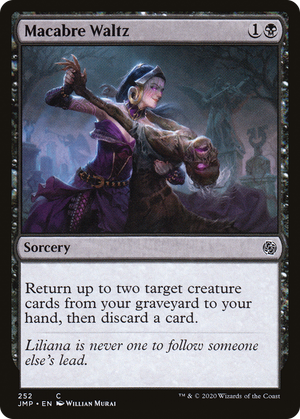
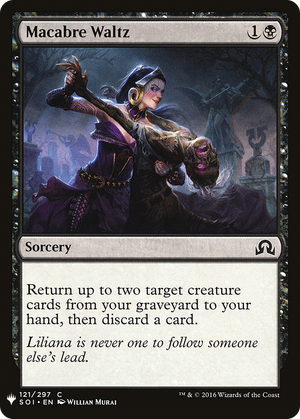
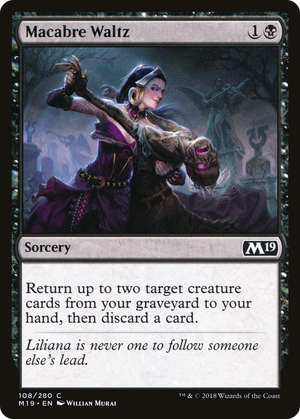
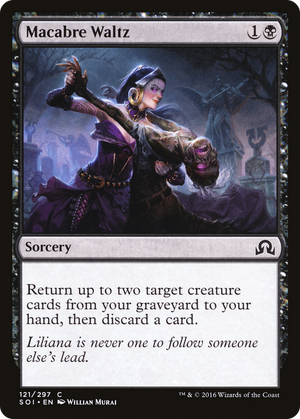
Two creatures back, one card down: the trade is dead even on paper, a 2-for-2 that converts the graveyard's contents into hand cards without growing your total. That parity is the honest read, and it explains why this kind of recursion lives in graveyard decks rather than fair midrange. The discard is the better half of the spell, not the cost grudgingly paid for it. Pitching a fattie you would rather cheat onto the battlefield than hardcast turns a recovery spell into a setup spell, seeding a reanimation target or a sacrifice payoff while clawing two smaller bodies back into range. Black has always charged for raising the dead in selection and tempo, and the friction here is the held card: the line pays off only when you have something worth discarding, which is why it rewards a build engineered around a full bin and a discard-as-enabler plan rather than card advantage. The two-target clause is what earns the slot over single-target raise-dead effects, rebuilding two creatures after a sweeper in one sorcery instead of two. It does nothing for noncreature recursion and demands you already have creatures dead, so it is a midgame rebuild tool, not an early play. Plain black value with the cost folded into the payoff: the deck that wants this is the one that wanted to discard anyway.