Luminous Rebuke


The reduction is the whole design conversation, and it runs against the way removal usually gets priced. A five-mana instant that destroys a creature is a bad rate on its own: white has always had cheaper unconditional kill spells, and paying full price here means you did something wrong. The intended cost is two mana, and that price only materializes when the target is already tapped. That single condition converts an overcosted spell into a punish button aimed at attackers and creatures with tap-based activated abilities. The tension is that the discount sits entirely on the opponent's terms, or rather on their tempo: a creature that never has to attack or tap never becomes a cheap target, so control mirrors and grindy standoffs strip the card of most of its efficiency. It comes into its own against aggression, where boards tap out to press damage and every attacker briefly volunteers for a two-mana execution at instant speed. The design ancestry here is the old idea of conditional removal that rewards patience (kill spells that got cheaper or better once the opponent committed), reframed so the trigger is the combat step itself. This wants patience rather than initiative: leave mana open, let the opponent make the first mistake by tapping out, then answer at a fraction of the cost rather than trading proactively on your own turn.
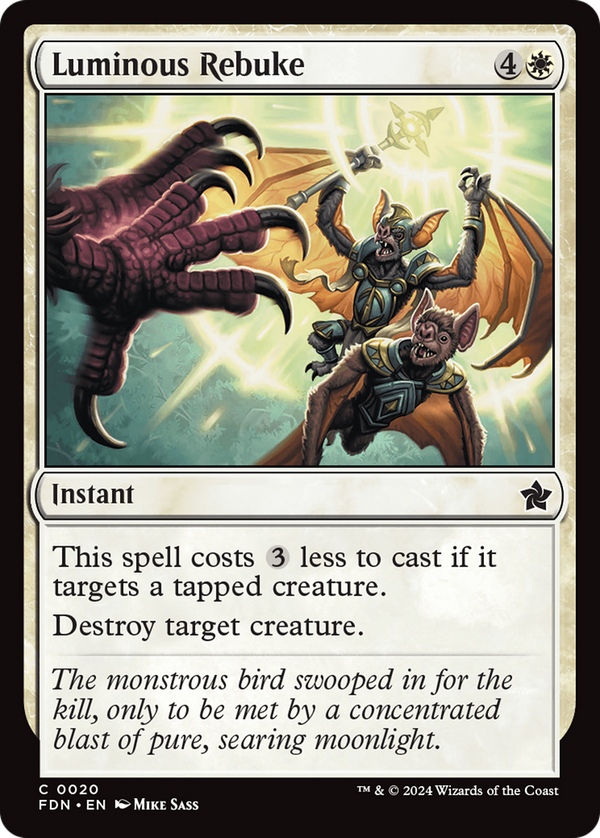
Rules text
 less to cast if it targets a tapped creature.
Destroy target creature.
less to cast if it targets a tapped creature.
Destroy target creature.