Lumbering Megasloth


The twelve mana in the corner is a bluff you never call. The generic portion of the cost drops by one for each counter among players and permanents (not just yours), which means every +1/+1 counter on a token army, every point of loyalty on a planeswalker, every poison, experience, and charge counter (including the ones your opponents are quietly stacking on their own board) shaves the price. The reduction bites only into the , so the floor is the two green pips it can never lose: at maximum discount, an 8/8 trampler lands for . That turns a nominally unplayable fatty into a payoff that reads the whole table's clock rather than a single deck's engine. The tapped-on-entry clause is what keeps the discount honest without turning it into a combo trick: however cheap it gets, it sits out the turn it arrives, so it cannot be flickered into a surprise blocker and always costs you a full turn cycle before it swings. That distinction pushes the card away from enabler and toward curve topper, something you cash in after the counters have already piled up as a byproduct of what your deck was doing anyway. It belongs to a small family of oversized creatures whose real casting cost is written in the state of the board, not in the corner of the card.
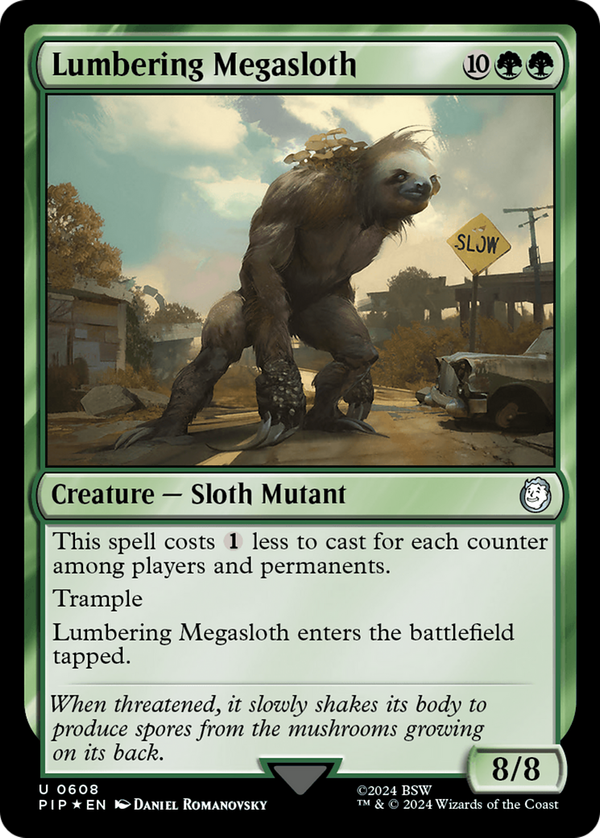
Rules text
 less to cast for each counter among players and permanents.
Trample
This creature enters tapped.
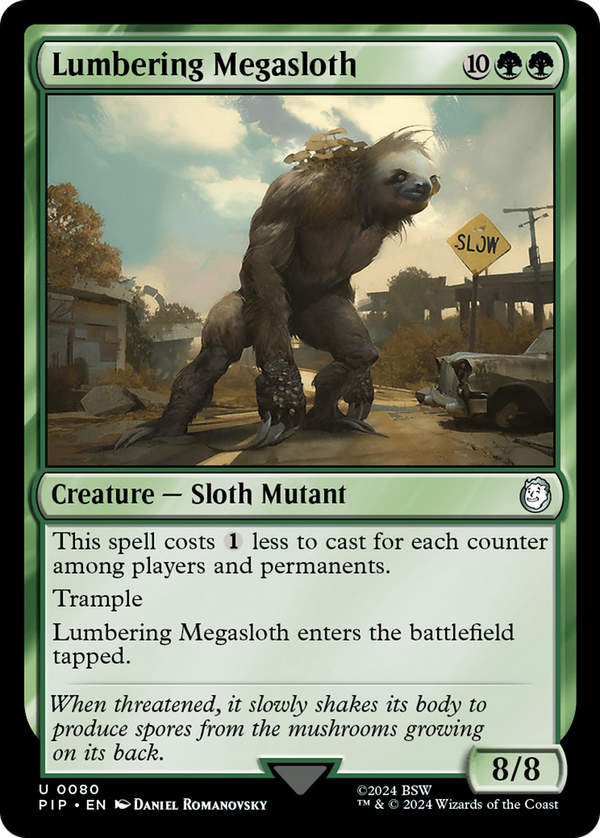
less to cast for each counter among players and permanents.
Trample
This creature enters tapped.