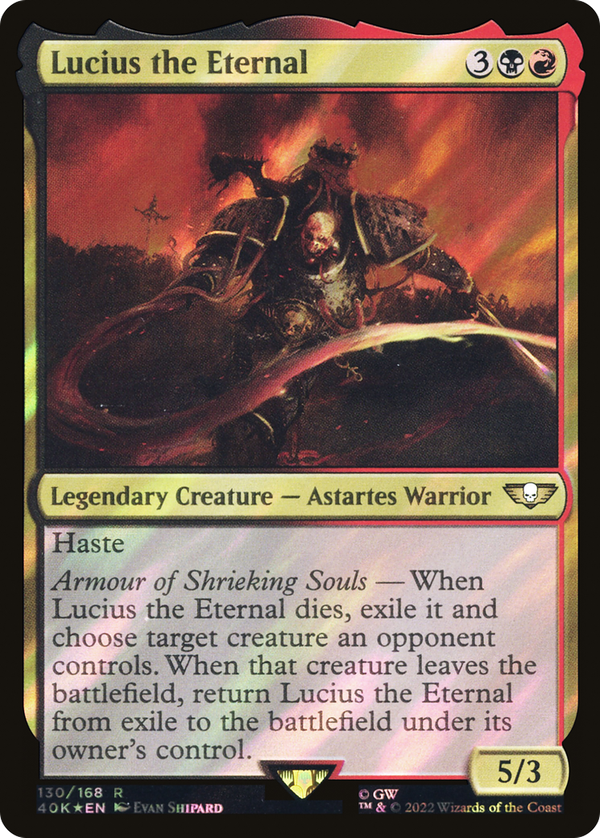
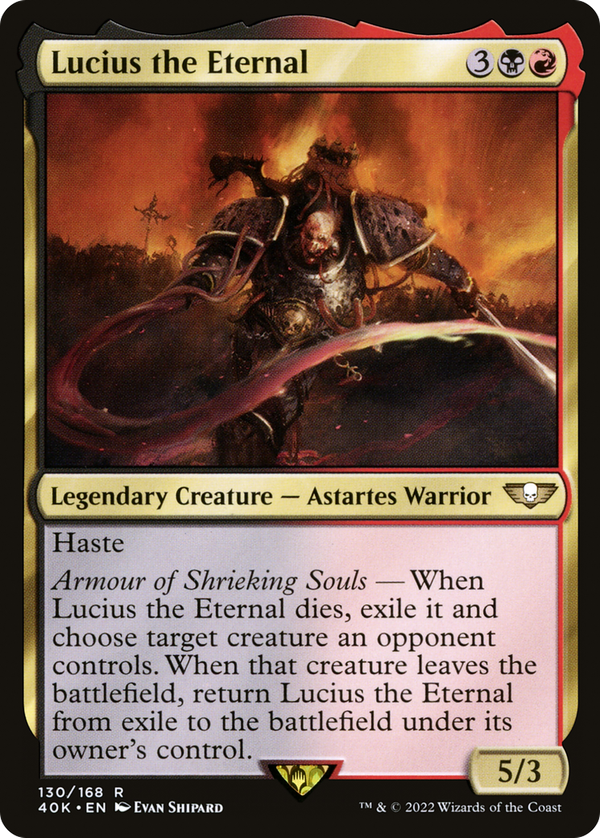
Lucius the Eternal



The flavor gets fully mechanized here: a warrior whose signature curse is that killing him spreads his soul to his killer. The death trigger enforces that fiction with a two-step exile loop. When the body dies, it does not stay in the graveyard where you could reanimate it on your own terms; it goes to exile and shackles itself to a creature an opponent controls, waiting for that creature to leave before it returns. The upshot is a strategic bind for the opponent rather than a recursion engine for you. Once the death trigger resolves, the marked creature becomes a liability: removing it, blocking with it into destruction, or sacrificing it all hand the 5/3 body back to its owner, so the correct play is often to leave the chosen creature stranded on the battlefield doing nothing. That inverts the usual removal calculus, where you kill a threat and move on. Here the kill is the easy part; disposing of the corpse is the trap. Haste matters more than the modest frame suggests, since the design wants to trade into combat, come back, and immediately press again, treating its own death as a tempo event rather than a loss. The gap between five power and three toughness is the tension the design leans into: five power wants to attack, three toughness wants to die, and the death clause turns a fragile beater into a recurring nuisance that punishes any opponent who tries to answer it conventionally.