Lost Soul


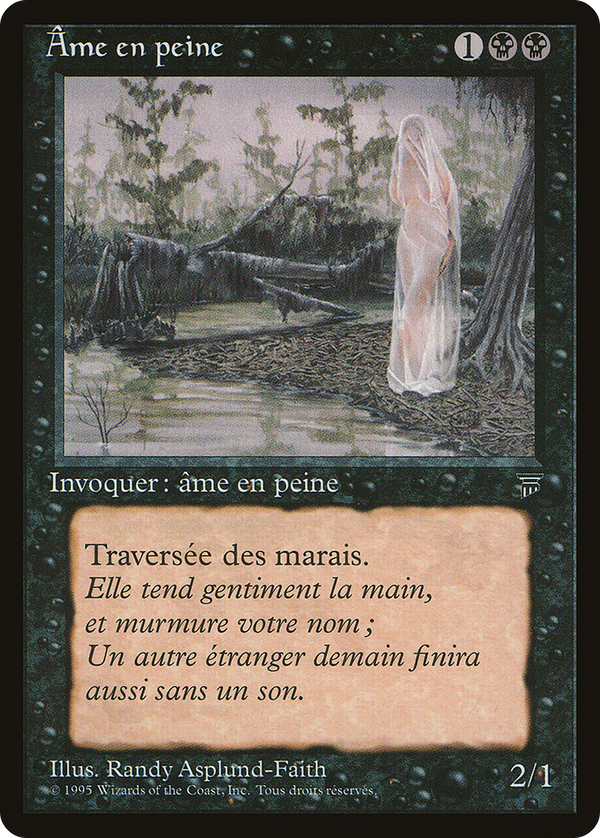
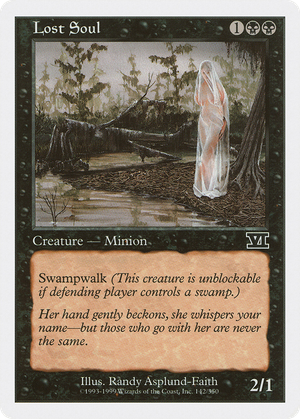
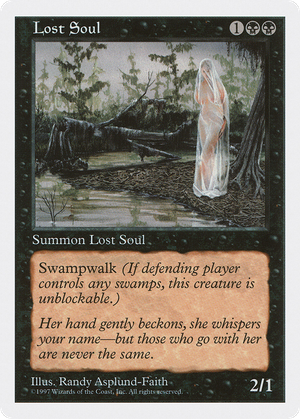
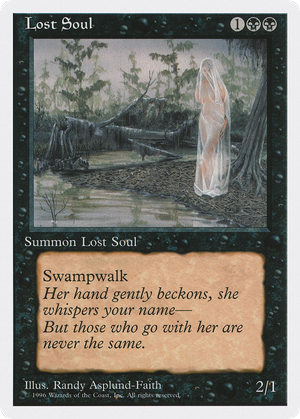
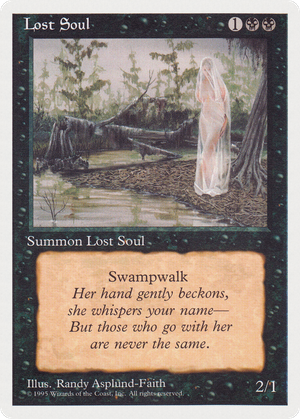
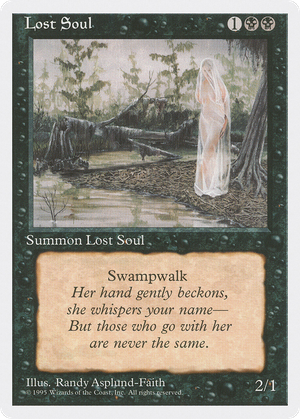
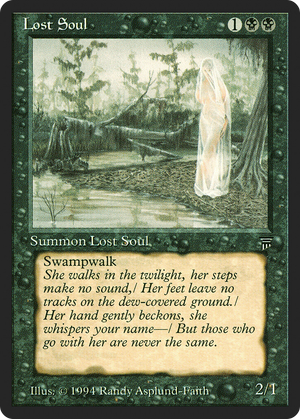
Evasion as a creature's entire reason for existing. A 2/1 for three mana was below curve even in 1994; the keyword pays you back the difference, but only against an opponent whose lands betray them. Swampwalk makes this unblockable when the defending player controls a Swamp and an ordinary 2/1 when they don't. That is the whole landwalk bargain of early Magic: the printed stats assume the worst-case matchup, and the keyword refunds you in a specific one. The mono-color landwalkers (this and the various Plainswalk and Mountainwalk commons of the era) were Wizards betting that the field would run enough of the relevant basic to make "unblockable against black decks" worth "a vanilla body against everyone else." What makes the keyword more durable than it looks is a rules detail the design leans on: swampwalk keys off the Swamp land type, not just basic Swamps, so any dual or shockland that carries the Swamp subtype turns it on too. Better fixing can widen the matchups where the evasion lives rather than narrow them. The keyword's real weakness is volatility, not extinction: it is either the best line on the board or completely absent, decided entirely by lands the controller does not get to choose. Lost Soul preserves that all-or-nothing bargain in amber, a 2/1 that is either unblockable or unremarkable depending on a coin the opponent's mana base flips.