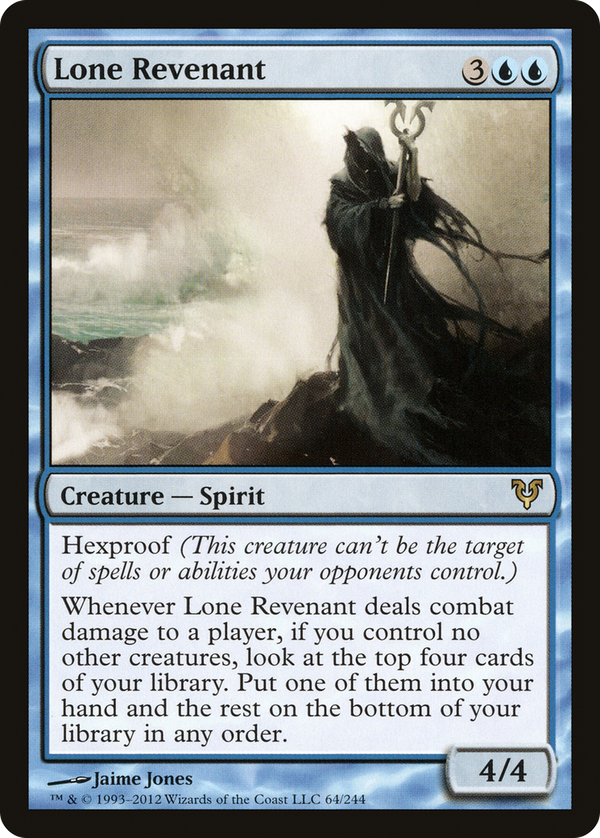
Lone Revenant


The trigger pays out only when this 4/4 is alone on the battlefield, and that single clause defines the entire deckbuilding problem. Hexproof already points one direction: it rewards investment in a lone unkillable threat, the kind of attacker you suit up and ride to a long game. The combat trigger sharpens that loner condition past what hexproof asks on its own. It is not enough that the body survives; you must control no other creatures at all when it connects, so every blocker, every token, every utility body you add to the board switches the engine off. The tension is not between going wide and going tall (hexproof never wanted the swarm); it is between the impulse to develop a board and the discipline to keep that board empty so the digging stays live. Most blue decks instinctively flinch at the bare-board state this demands: no extra pressure, no chump blockers, just the one creature that has to land combat damage every turn to earn its keep. Lean into it and the reward is steady selection, four cards deep on each connection, the unwanted ones buried while the one you want goes to hand. The design wants a single recurring threat and demands you resist the very habit (adding creatures) that otherwise makes a blue deck feel safe. That contradiction, hexproof pulling you toward one perfect body while the trigger punishes any second, leaves the card stranded between an idea and a role: it asks for a build no blue deck naturally wants to make.