Locket of Yesterdays

Cost reduction that scales off graveyard redundancy is one of the strangest engines in the game, because it asks you to do something most decks treat as failure: load your bin with multiple copies of the same card. The reduction stacks per identical name already dead, so the payoff curve is steep and back-loaded. The first copy of a spell pays full price, but by the time three or four siblings sit in the graveyard, the next one can drop to a single mana or free. That structure rewards exactly one kind of deck: a focused list running near-maxed counts of a small number of names, where every cantrip, burn spell, or creature you discard, mill, or simply cast cheapens the rest of its kind. The pile has to be built from real cards, too. The artifact counts cards in your graveyard, so tokens and the spell copies made by effects like Twincast never qualify; a copy ceases to exist before it can reach the bin. Among the cost-reducers that key off the graveyard rather than the battlefield, this is the most extreme: not a flat discount, not a per-creature shave, but a snowball that accelerates the deeper your bin runs and the more single-mindedly you commit to a handful of names. The friction is built into the timing: it only discounts spells whose namesakes already sit in the graveyard, so it pays second and demands you build the setup first.
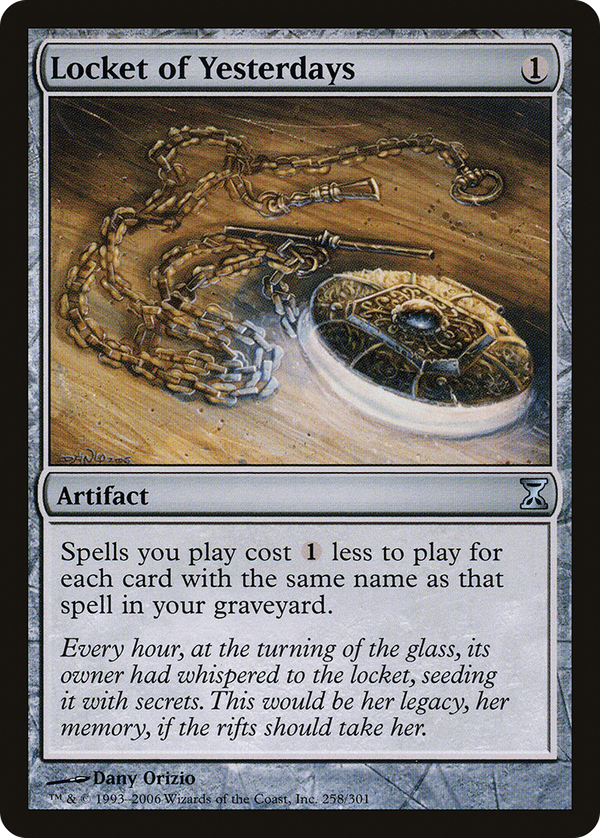
Rules text
less to cast for each card with the same name as that spell in your graveyard.