Liturgy of Blood


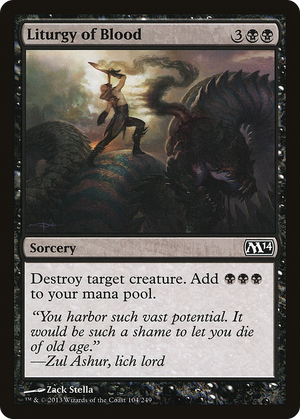
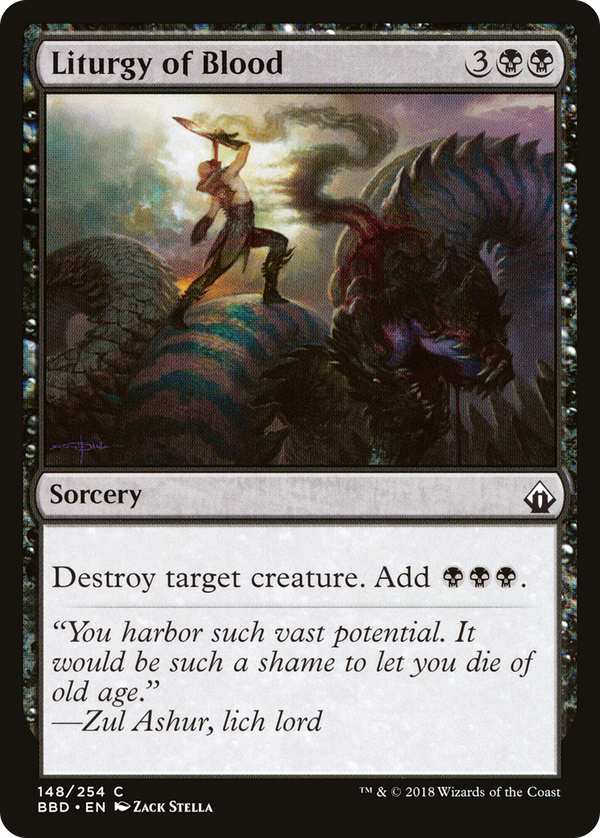
The math is the pitch: pay five for an unconditional kill, and three black mana floats back, so the spell costs a net of two and refunds most of its own price the moment it resolves. That refund is the entire reason to run it over the long line of five-mana destroy-target-creature effects that ask you to spend the turn trading and then move on. Here the removal funds the next play, doubling as a ritual once the creature is dead. The catch is the floor on the price: at five mana it sits well above the rate of cheaper unconditional removal, the returned mana is locked to black, and it all arrives at once, so the value depends on having something worth dumping it into that same turn (a haymaker to follow up, a second spell, a black-hungry activated ability). Lean too far toward the ritual and you have overpaid for the kill; let the three black drain away unused and the card looks slow. The design answers a question flat removal never poses: what is unconditional creature destruction worth if it pays part of its own cost back? The answer is a clean, color-committed effect for black decks that want their curve to keep rolling after they trade, rather than a premium answer for decks chasing the cheapest possible out.
Rules text
.