Lithophage


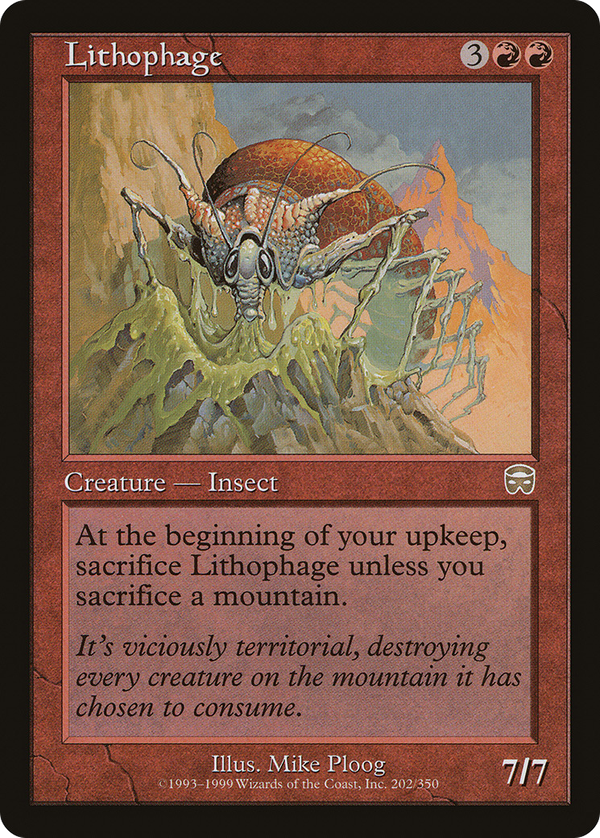
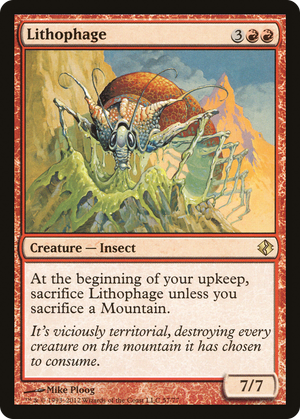
Seven power for five mana is a steep discount, and the price is paid not in mana but in land: every upkeep, you feed it a Mountain or it dies. That clock is the whole machine. A 7/7 body on turn five is large enough to end games fast, but the sacrifice tax means the card races your own manabase, eating a land per turn until either the opponent is dead or you have strip-mined yourself into a topdeck war. It is a glass cannon built from the resource that usually does the opposite of pressuring a clock: your lands. Most beaters of this early era paid for their size with a drawback that hit the board (defender, can't-block, must-attack); this one reaches backward into infrastructure players treat as untouchable and makes it disposable. Running it means sequencing the rest of your curve so the lost Mountains stop mattering: empty your hand fast, win before the mana attrition catches up, and treat each sacrificed land as a turn of life already cashed in. The card sits at the seam between fatty and time bomb, a self-cannibalizing creature that poses one blunt question (can you close before your own engine runs dry?) and answers it with nothing but speed.