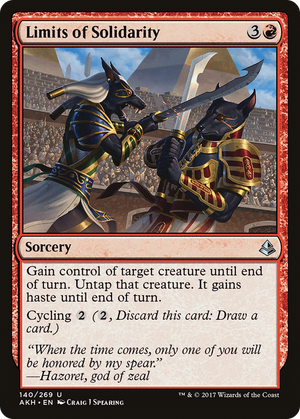
Limits of Solidarity


The defining trait of red's threaten effects is that they pay you back for spending a card on a creature you don't keep: the only honest dividend is the attack. This one delivers on the standard schedule, untapping the borrowed creature and handing it haste so the swing connects the turn you steal it, after which the body goes back to its owner. The cycling clause is where it earns its keep against the bare-bones versions of the effect: a steal-and-swing spell is dead weight in a hand with nothing worth stealing or no board to push through, so the option to discard it for a card converts the worst draws into a replacement rather than a stranded threat. That is the design tension these effects have always carried: the more situational the ceiling, the more a spell needs a floor, and cycling is the cleanest floor red has. The play pattern stays the same as it has been since this category first appeared: take the opponent's largest blocker to clear a path, or take a creature and feed it to a sacrifice outlet before the end step returns it. The price is the friction. Four mana for a one-turn rental keeps the rate fair against the more aggressive two- and three-mana versions of the trick, and because cycling is its own activated ability from the hand rather than an alternative casting cost, the decision splits across two moments: pay four to steal now, or pay two later to discard the card for a fresh one.
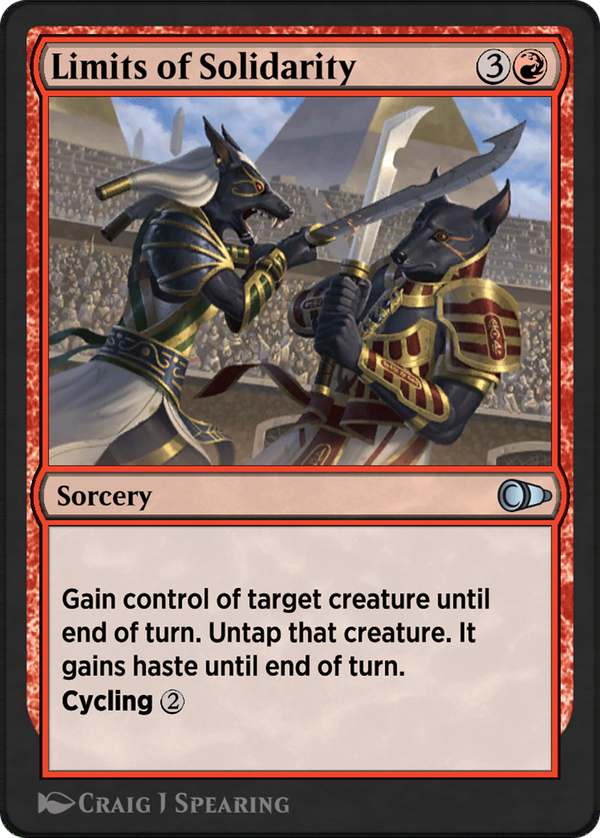
Rules text
 (, Discard this card: Draw a card.)