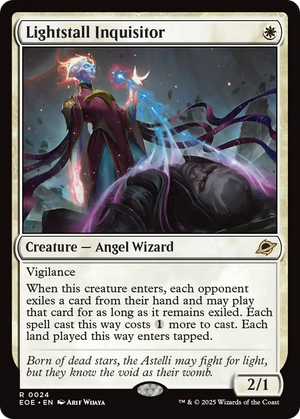
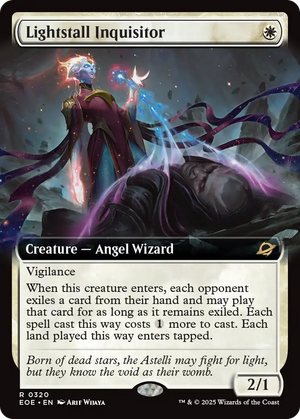
Lightstall Inquisitor

The tension in every hand-disruption spell is what happens to the card you take: peel it to the graveyard and you have traded one-for-one; hold it and you risk symmetry. This one-drop resolves that tension by threatening the card rather than removing it. Each opponent chooses what to exile, and gets to play it back at a tax, so the disruption is soft: you are not stripping a resource, you are making it more expensive and later than it wanted to be. That framing is the whole design. A land they exile enters tapped, so it costs them a turn of tempo; a spell they exile costs an extra generic, so it costs them a full mana or a delayed curve. The white-weenie shell that wants a 2/1 with vigilance is exactly the deck that wants to tax an opponent's development while attacking and holding back a blocker. The choice living with the opponent is what keeps the effect from being a strict hand-rip, and it is also what makes it a clean, low-friction inclusion: no information asymmetry to adjudicate, no dead card if they are hellbent, just a small tempo bite stapled to an aggressive body. It reads as disruption but plays as a tax, and the distinction is the point.
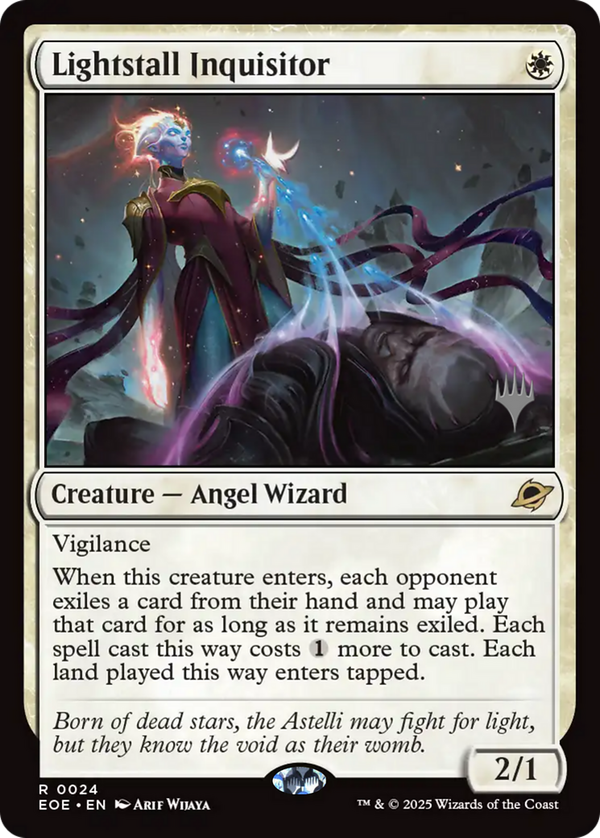
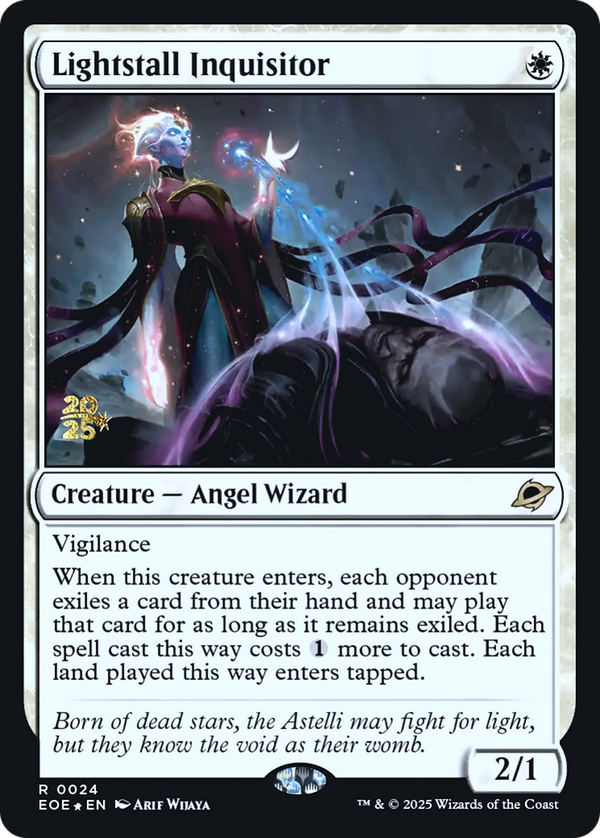
Rules text
 more to cast. Each land played this way enters tapped.