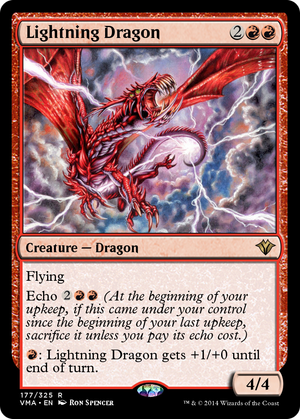
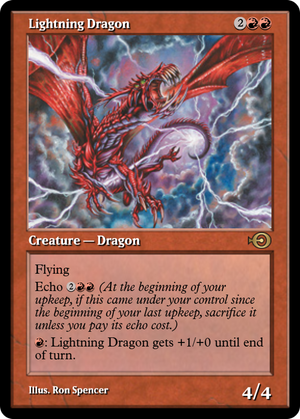
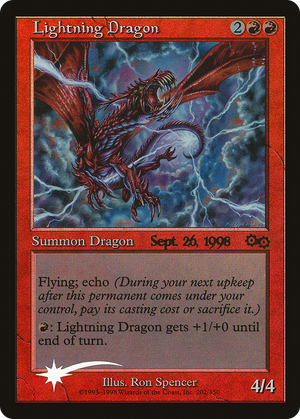
Lightning Dragon


A four-mana 4/4 flier deploys like a premium creature, but the bill arrives in two installments: pay to play it, then more at the start of your next turn or watch it sacrifice itself. The second invoice lands when your mana is most spoken for, right after untapping, which means the card is honest only for a deck that has already committed to pressing the attack. The firebreathing ability resolves that tension. Each red mana buys another point of power for the swing, so a board where you are holding up mana to push damage is exactly where this Dragon prefers to be attacking rather than blocking on a stalled position. A control build splashing it as a value play eats the discount on the front end and then chokes on it; an aggressive build treats the echo upkeep as a threshold it must clear to unlock the swing, since the Dragon cannot attack the turn it lands. The mechanic that defines it was a short-lived experiment in front-loaded creatures, mostly retired after its block, but the underlying logic outlived the keyword: discount the entry, demand full price later, and let the body's offensive ceiling decide whether eating the second payment is worth it. Here the ceiling is high enough, and the means of climbing it cheap enough, that the math usually favors swinging.
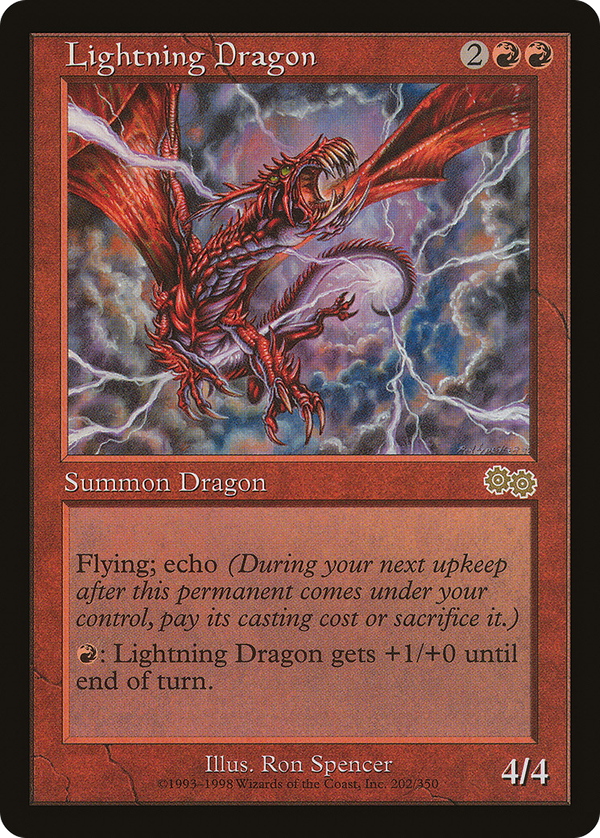
Rules text
(At the beginning of your upkeep, if this came under your control since the beginning of your last upkeep, sacrifice it unless you pay its echo cost.)
: This creature gets +1/+0 until end of turn.