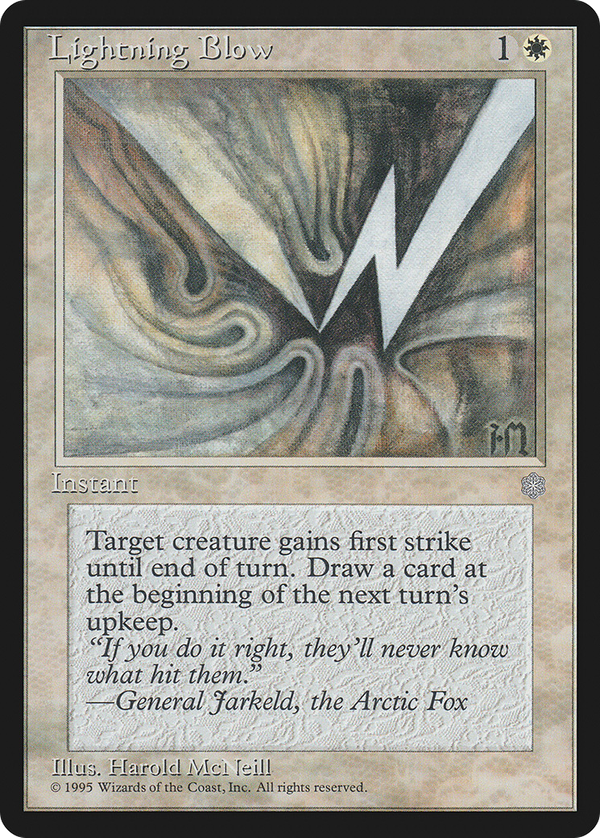
Lightning Blow


First strike for two mana was never the point; white had cheaper ways to win a fight. What this card was really testing is whether a combat trick could stop costing you a card without immediately handing one back to refill mid-fight. The first-strike grant shapes the current combat, but the replacement is held in reserve: it triggers on the following upkeep, which (during your own combat) belongs to the opponent, long after the bodies have traded or survived. That deferral is what keeps the cantrip from acting like an instant-speed draw bolted onto a trick; the cost you pay is sequencing, not mana. The draw is also unconditional and detached from whether the creature lives, so a chump-blocked or burned-down target still hands you the card. That makes it less a pure trick and more a card-neutral piece of interaction, a slow refund white was allowed to collect before card advantage became something the color could openly buy. The rate reads as quaint against anything modern, but the structural idea (push the payoff late, sever it from the target's fate) is a clean early model for pricing a combat trick that does not want to be down a card for casting it.