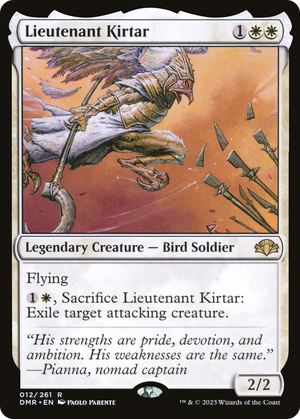
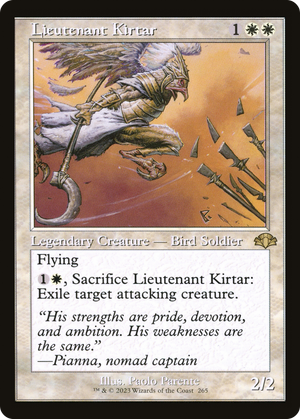
Lieutenant Kirtar


Removing an attacker by exiling it does two things at once: it sidesteps regeneration and indestructibility, and it answers a creature you would otherwise have to block, all before combat damage resolves. That window is the design. The sacrifice clause means the body and the answer occupy the same card; the 2/2 flyer holds the ground or chump-blocks until the math demands a clean exile, at which point you trade Kirtar's life for the kill. The cost is baked into the targeting restriction: the ability only hits attacking creatures, so it punishes the opponent's aggression rather than enabling your own. Against a defensive opponent who never commits to combat, the activated ability does nothing, and you are left with an evasive three-drop and no use for the second half of the card. That asymmetry is what keeps a one-shot exile at this rate honest. The flavor tracks the mechanics neatly: a guard captain who throws himself in front of an enemy charge, removing the threat at the cost of his own life. Exile rather than destroy was a deliberate choice for an era when graveyard recursion was a defining concern, and it makes Kirtar a hard answer to the creatures that come back rather than a temporary one. The card sits in the lineage of white's "block and remove" creatures, where the body itself is the payment for the effect.
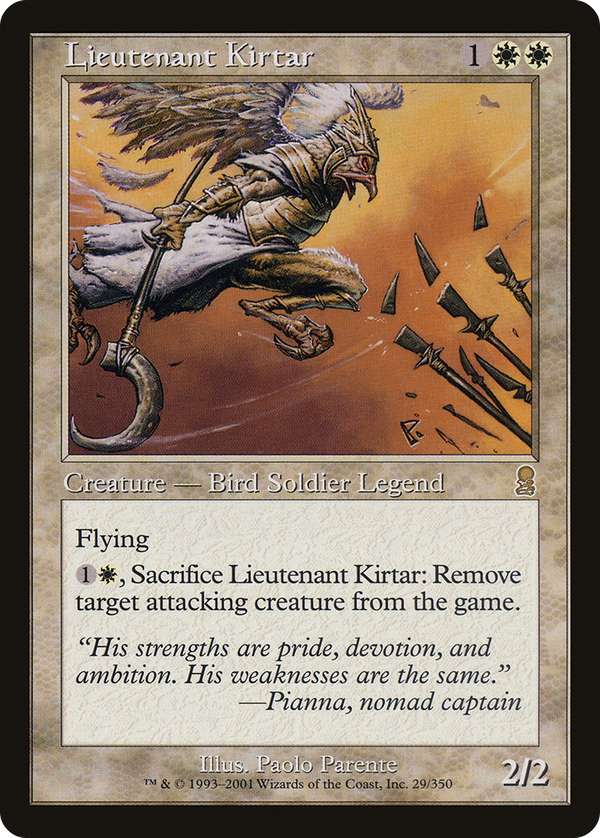
Rules text
, Sacrifice Lieutenant Kirtar: Exile target attacking creature.