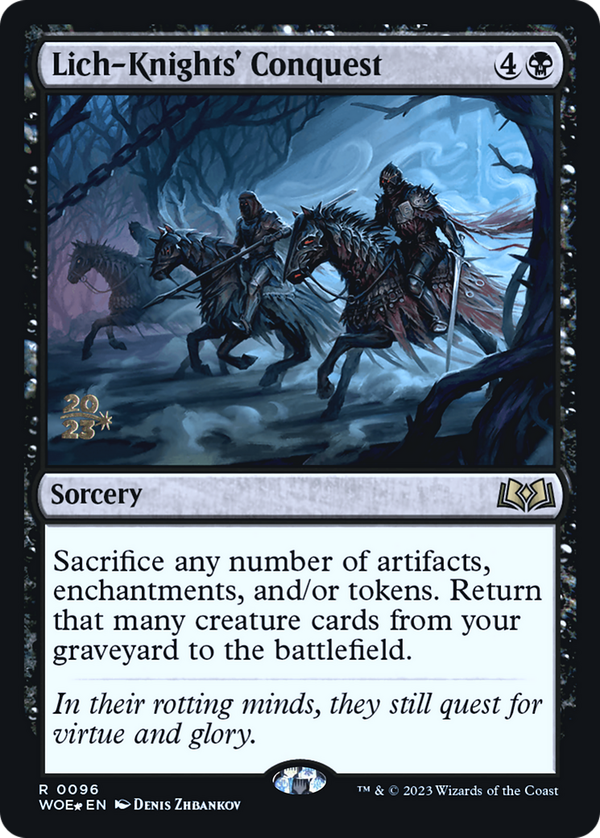
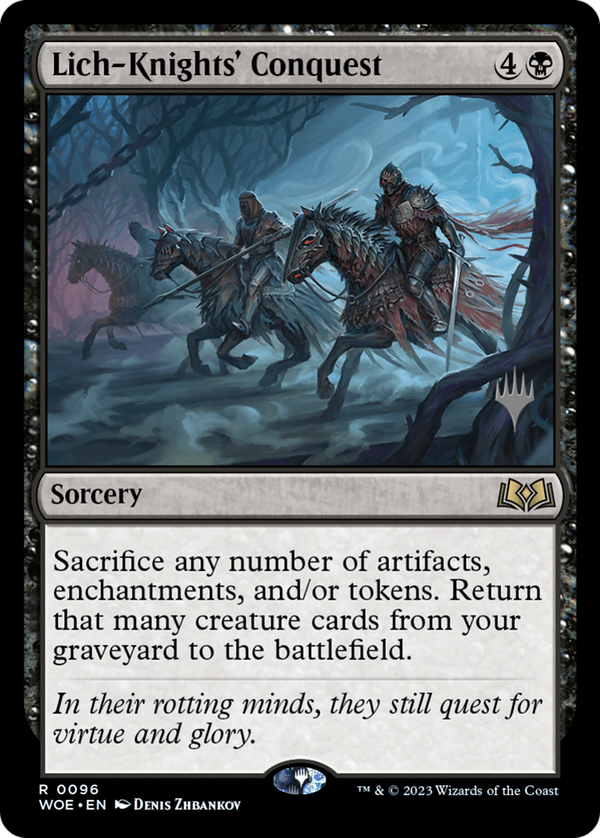
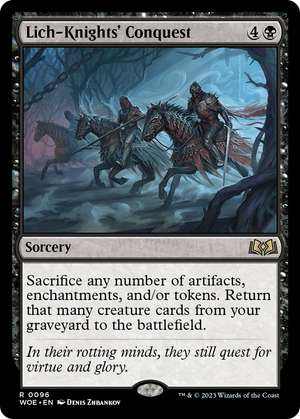
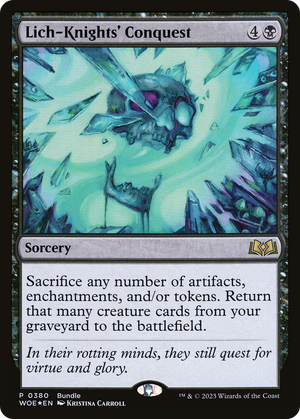
Lich-Knights' Conquest


The exchange rate is the whole design: not one big reanimation, but many small ones, each paid for by a permanent you are willing to feed to the graveyard. Most mass-reanimation effects fix a ceiling and let you fill it however you can; this one ties the ceiling directly to how much disposable material sits on your battlefield. Sacrifice five tokens, get five creatures back; the spell scales with a board state you have already built rather than with your graveyard's raw size. That reframes the deckbuilding question from "what died" to "what can I afford to spend," which is why it wants Treasure, Clue, Food, a wide token base, or an enchantress shell overflowing with cheap permanents rather than a pile of big bodies waiting to be cheated in. The symmetry is deliberate and unusually strict: fodder in, creatures out, one for one, with no filtering, no cost reduction, and no way to overpay for a discount. It rewards a specific kind of engine, one that generates converted resources faster than it needs them, and it does nothing at all in a deck that cannot produce a surplus. The result is a reanimation spell that reads less like Living Death and more like a payoff for a sacrifice economy, converting the tokens and trinkets a value deck accumulates as a byproduct into a graveyard's worth of returning threats.