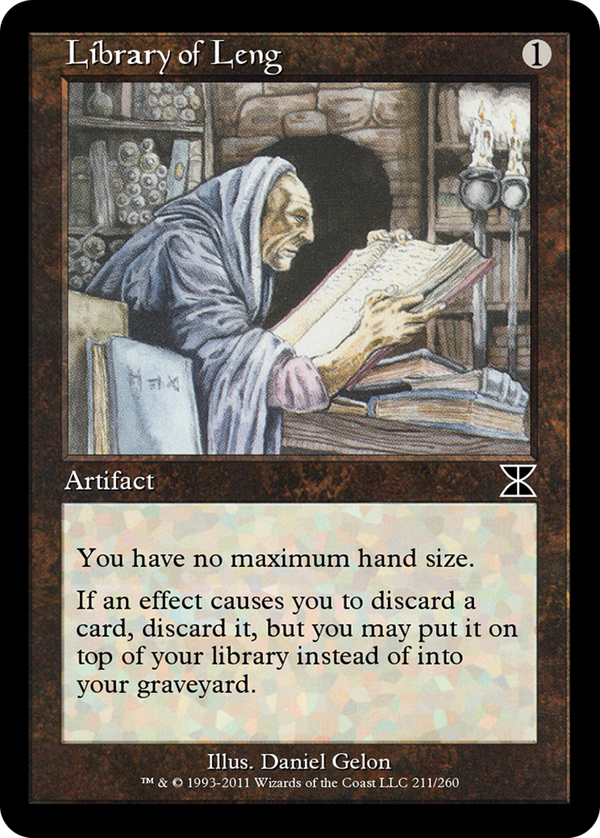
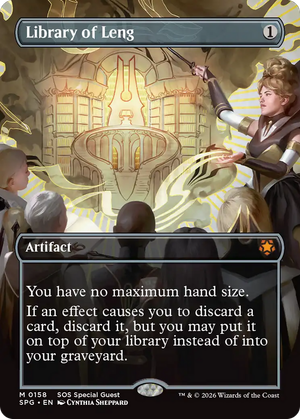
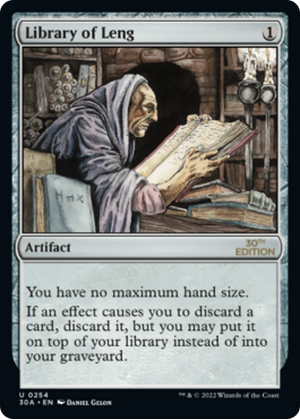
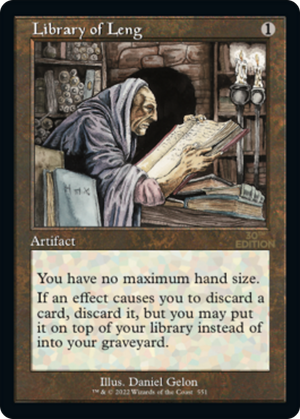
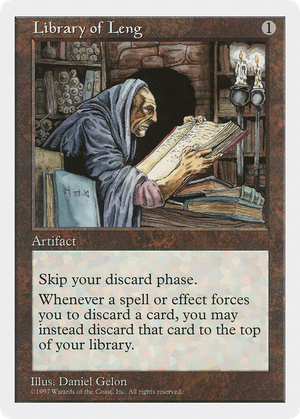
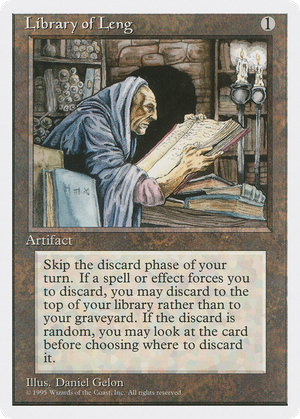
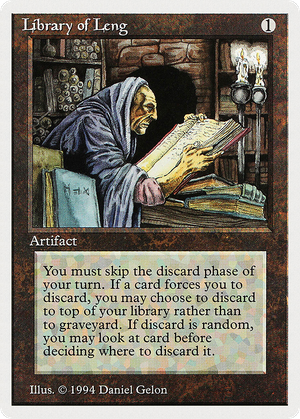
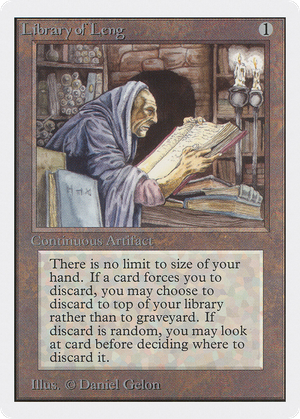
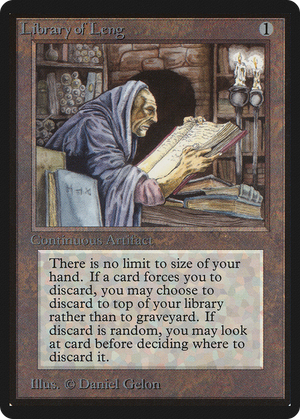
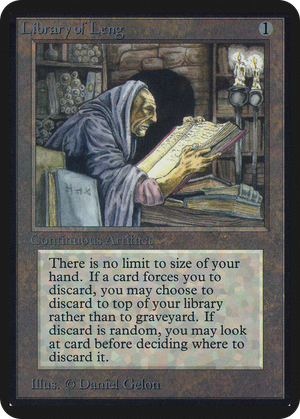
Library of Leng

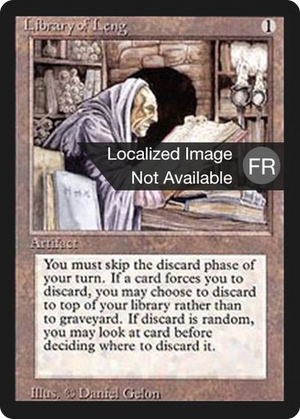
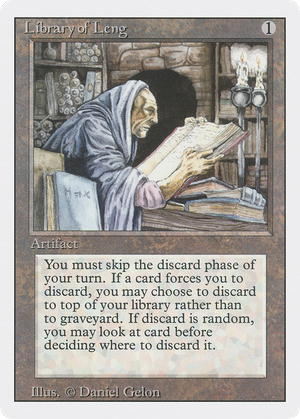
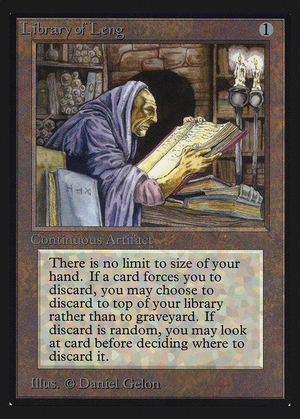
Two of Magic's most basic assumptions, the maximum hand size and the rule that discarded cards go to the graveyard, were default-game furniture that no other Alpha card thought to question. This one questions both for a single mana, on two clauses that work independently rather than in concert. The first lifts the hand-size cap, which mostly matters in the cleanup step: a player who would otherwise pitch excess cards simply keeps everything. The second is the more interesting line, and the one that gives the card its identity: when an effect causes you to discard, you may place the card on top of your library instead of in the graveyard. That does not erase the cost of discarding; you have traded a card in hand for a card you will draw again, which effectively skips your next draw step. What it buys is information and control over sequencing, turning an opponent's targeted discard into a card you reload on your own terms rather than one you lose outright. The critical boundary is that this catches only discards caused by effects, not discards paid as a cost: cycling, or pitching a card to cast a spell, falls outside the replacement, because there the card is the price, not the product of an instruction to discard. That distinction is the line every modern card-selection mechanic lands on one side of or the other, and Library of Leng was the first card to draw it.