Leviathan


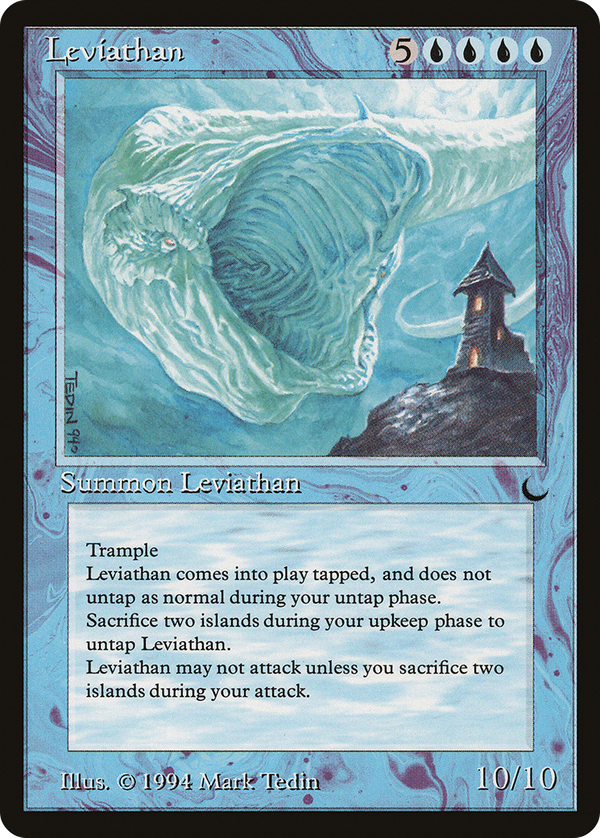
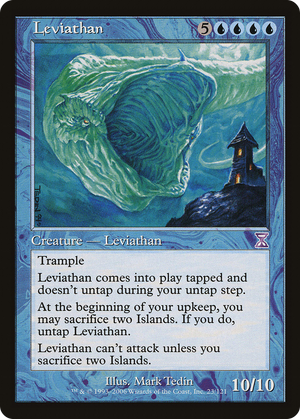
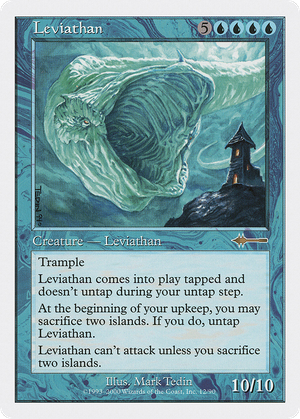
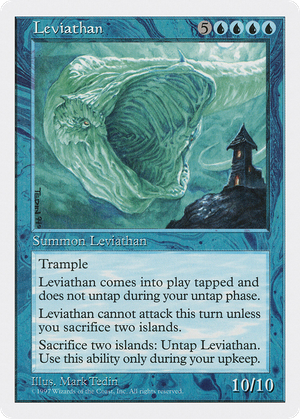
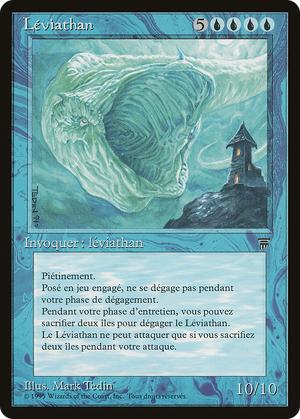
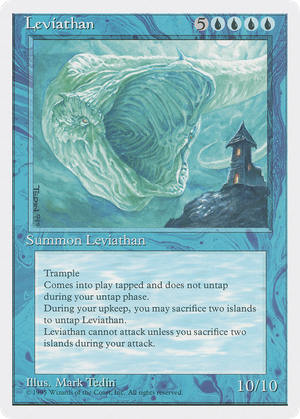
A 10/10 trampler for nine mana in 1994 was supposed to be a payoff, but every clause on the card is a fine printed against actually using it. It enters tapped and never untaps on its own; you buy each untap by feeding two Islands into the sacrifice clause during upkeep; and even then it cannot swing unless you pitch two more Islands as attackers are declared. That is four Islands burned per attack, with the four blue pips the cast already demands stacked underneath. The design represents an early, blunt approach to balancing a fatty: rather than gate the body behind a hard restriction (a summoning condition, a one-shot trigger), the era's designers stapled a recurring upkeep tax to it, so the cost of a 10/10 is not paid once but every turn you want it to matter, and the resource it eats is the same color of land that cast it. Connecting a few times means strip-mining your own mana base into the dirt: the body dismantles the engine that supports it. This belongs to a vanished design philosophy that trusted enormous numbers to sell a card and trusted brutal text to keep it in check, with no consideration for whether the two ever met in the middle. Later sea monsters learned to ask for less; this one asked for everything and gave a clean kill in return, if you could afford it.