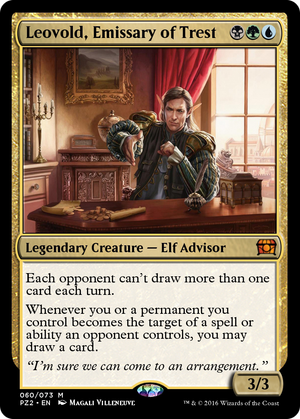
Leovold, Emissary of Trest



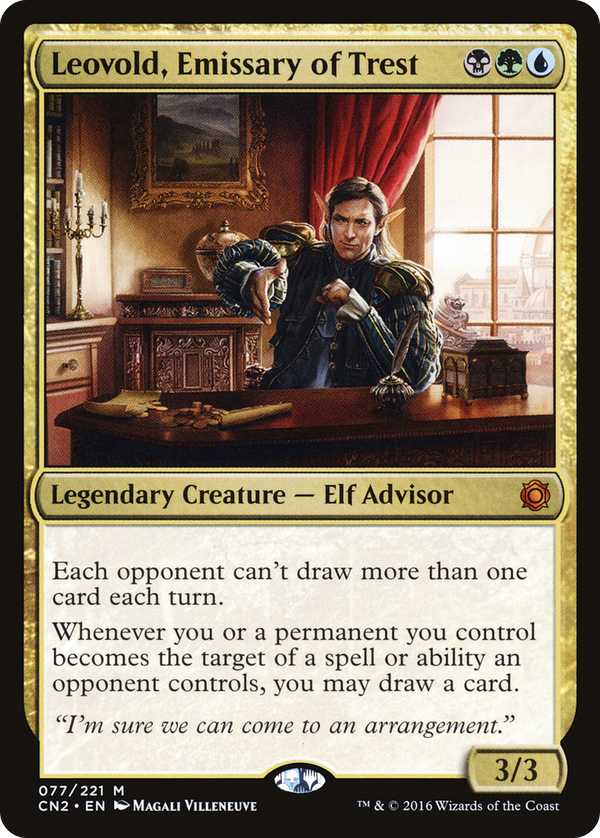
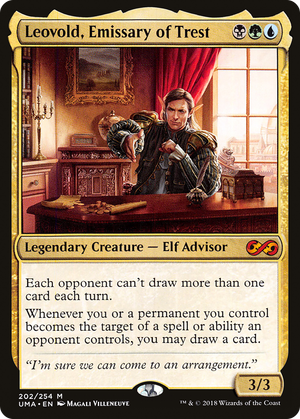
The genius here is that the two abilities are the same idea pointed in opposite directions. The static effect strangles every opponent's card advantage to one draw per turn, neutralizing the whole engine of multiplayer politics: wheel effects, group-hug draw spells, the slow grind of card-for-card value that defines longer games. The triggered ability then taxes anyone who tries to interact with you, turning every targeted removal spell, every steal effect, every "draw a card, then discard" tutor pointed your way into a card in your hand. Together they install a one-sided rule: opponents may not pull ahead by drawing, and they pay you for the privilege of touching your board. That asymmetry is why this Elf became a fixture wherever card advantage is the only currency that matters, and why multiplayer tables tend to treat it as a problem to be answered rather than a creature to be ignored: a three-mana body that warps the resource math of every other player at once. The 3/3 frame is almost beside the point; nobody plays this for combat. They play it to make sure the table draws like it is playing one-on-one while they alone draw like it is a multiplayer game. The design is also unusually punishing of instinct: the reflex to remove the threat is exactly what feeds it, so the creature protects itself not with a keyword but with the incentive structure it imposes on everyone else.