Layla Hassan


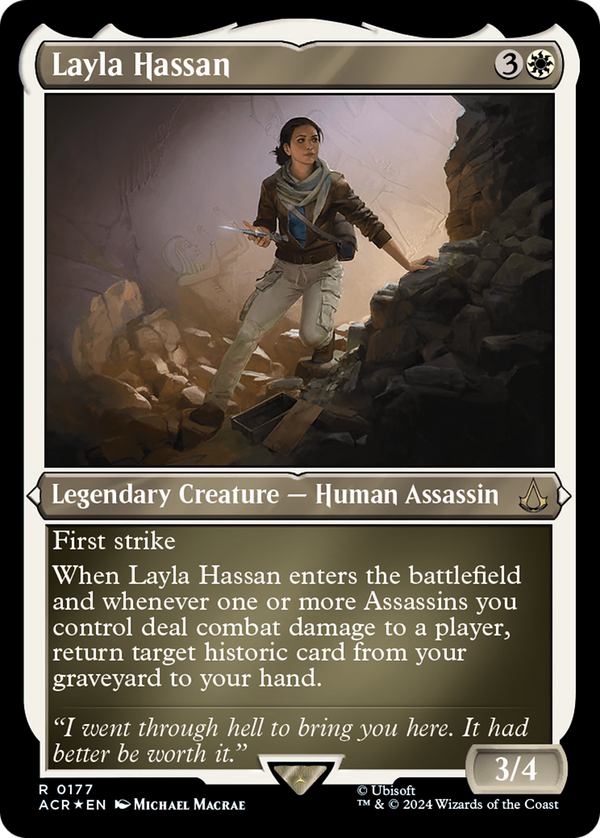
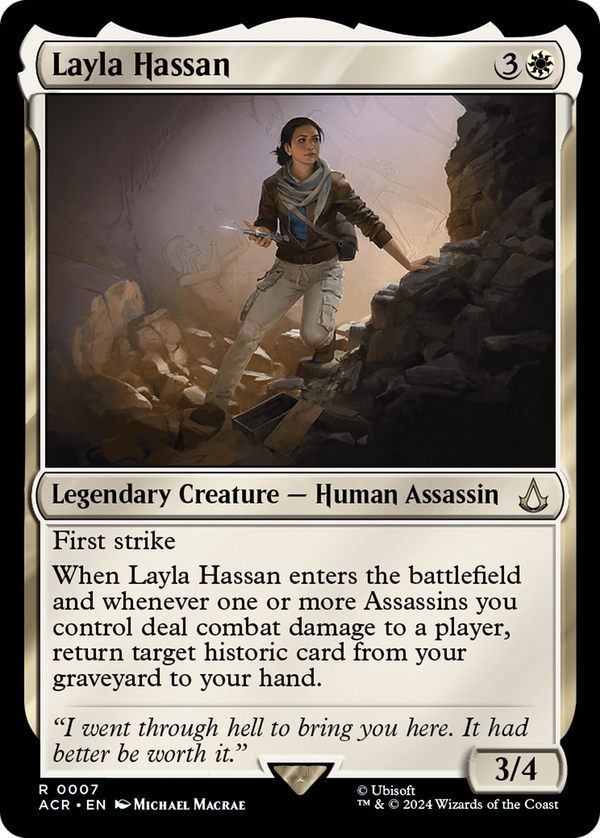
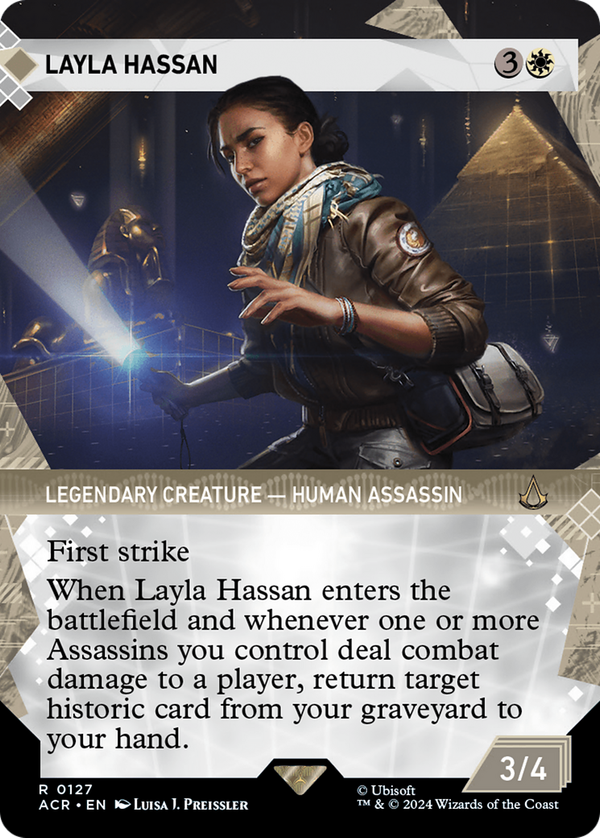
What separates this from the usual white recursion body is the target it reaches for: not creatures, not artifacts, but historic cards, the umbrella that gathers legendaries, artifacts, and Sagas under one word. That widens the pool from a single card type into a whole class of value permanents, and the recursion fires on a loop rather than once. The enters-trigger primes the engine, but the real payoff is the combat clause: any turn one or more of your Assassins connect with a player, a historic card comes back. Note the shape of that trigger carefully: it rewards you for hitting a player at all, not for hitting harder. One connecting Assassin returns the same single card as five, so the engine asks you to reliably land damage across turns, not to overload a single attack step. First strike on a 3/4 is the small structural detail that makes that reliability possible, letting the body survive combat and clear the way to connect. The design leans on Assassin, a tribe that has rarely carried a graveyard engine, so the card doubles as an incentive to build around a creature type more accustomed to one-shot removal effects than repeatable card advantage. Read the two halves together and the picture is a resilient blocker that seeds its own recursion the moment it lands, then converts each successful assault into a returned legendary or artifact: value measured in turns of connection, not bodies committed.