Lava-Field Overlord


The printed cost reads , but the whole design lives in how that seven splits away from the two. Assist lets a second player cover up to the generic , which leaves the caster anchoring only the that keeps this Dragon red. That turns a nine-mana finisher into a negotiation: one player ramps toward the body while a partner subsidizes the bulk of it, and the 5/4 flier lands on a turn neither could reach alone, then burns something for four on the way in. The damage clause is aimed at a creature an opponent controls, so from the caster's seat it always points across the table rather than at their own board: a trigger built to reward, not punish, the alliance that paid for it. Note the seam, though: assist invites anyone to chip in, so an opposing player could pay into the cast and still watch one of their own creatures take the four, a wrinkle that makes the mana-sharing a genuine bit of table politics rather than pure charity. Read as a solo card, it is an overpriced body with an arrival burn attached, and the assist text sits inert with nobody to pay it. Read as a cooperative spell, the seven generic becomes shared bookkeeping and the rate suddenly reads fine. This is a finisher whose price is a conversation, not a number you pay by yourself.
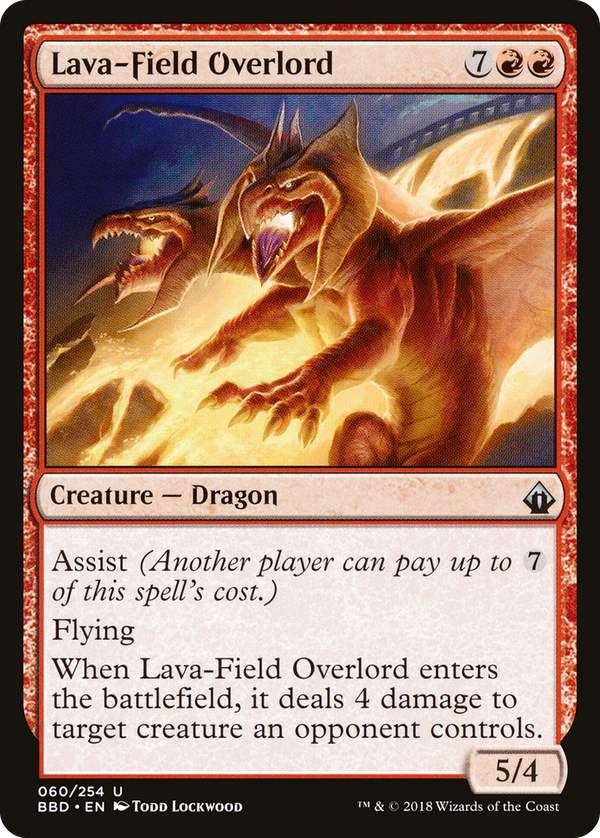
Rules text
of this spell's cost.)
Flying
When this creature enters, it deals 4 damage to target creature an opponent controls.