Lat-Nam's Legacy


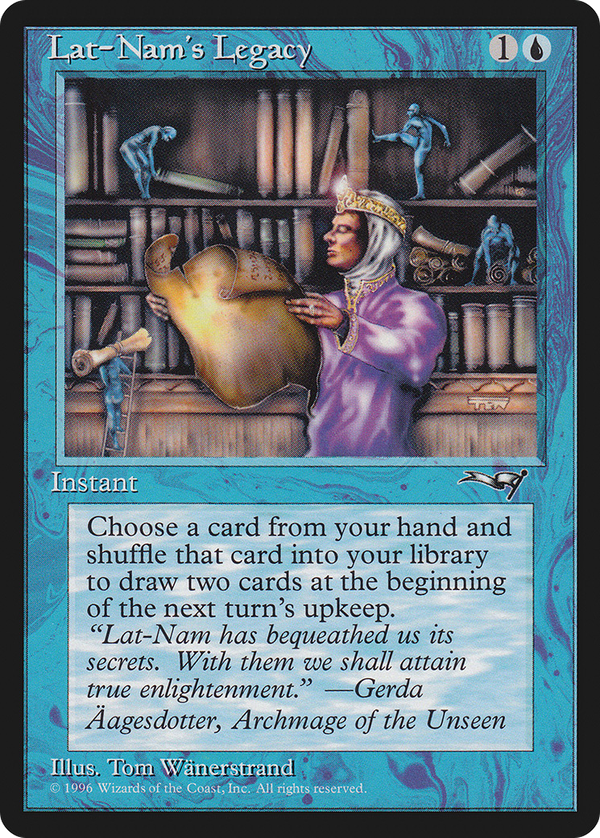
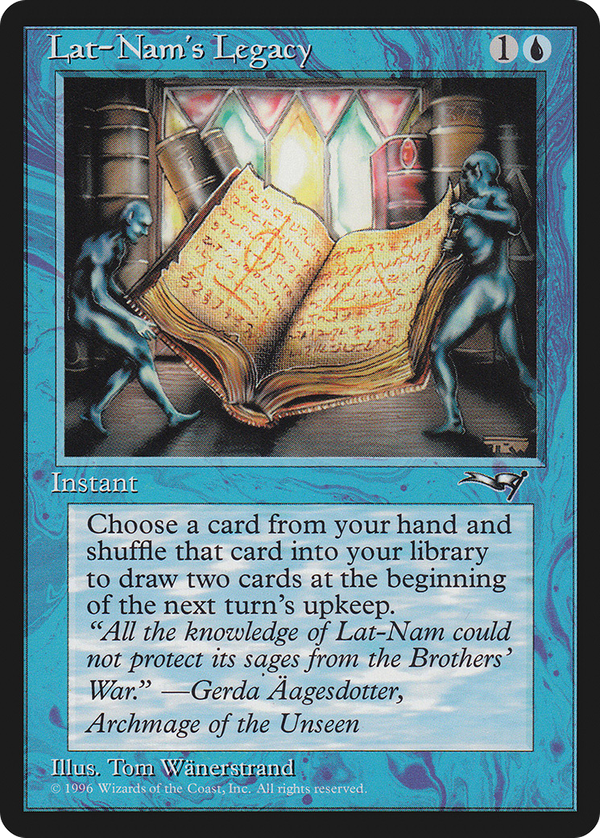
Card parity dressed up as card draw, and that is the whole design. You spend the spell, you shuffle a card from your hand back into your library, and you draw two later: net zero on your hand size, which keeps the rate honest at two for two. What you actually buy is selection, not advantage. The card you bury is a dead card you no longer hold, thinned back into a sixty-card stack you may never see again, and the two you draw are fresh looks. In an era when blue's clean filtering options were thin, that swap (worst card out, two unknowns in) was the real product. The shuffle does double duty: it clears a clogged hand and it reshuffles your deck, which matters more than it sounds when a known dead draw is sitting on top. The delay is the balancing lever, and it cuts in a specific direction. The draw waits for the next upkeep, so cast on your own turn it does not reload you this turn; cast at instant speed during an opponent's end step, though, and the next turn is yours, meaning the cards arrive at your own upkeep before you have spent anything. That window is the reason to hold it up rather than fire it on the main phase: you pay on their clock and collect on yours. A quiet piece of card-economy design from a time when filtering at parity still had to justify its mana.