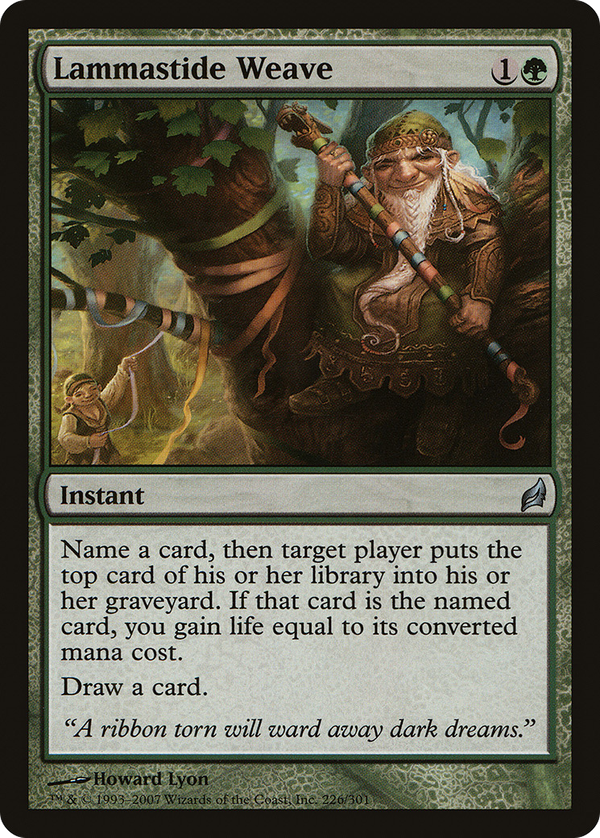
Lammastide Weave


A guessing game wearing the clothes of a cantrip. The naming clause asks you to predict the top card of a library you cannot see, and the reward (life equal to whatever you correctly called) is so conditional that it functions less as a payoff and more as an occasional bonus. The card never strands you when the guess misses, because the final clause is unconditional: you replace it regardless. That replacement is what makes the design hold together. The mill-one-and-draw-one skeleton is cheap card filtering on its own; the name-call rides on top as upside that costs nothing extra to attempt. The most reliable way to hit the guess is to mill yourself, where you can stack a known card or simply name something you already saw, but the target clause lets it point anywhere, so it doubles as a single-card peek at an opponent's deck with a draw attached. As an instant, it slots into a counterspell-holding posture without spending your turn, and the life gain, when it lands on something expensive, can be a meaningful swing rather than a rounding error. Built for green decks that wanted graveyard fuel without surrendering tempo, it represents a recurring green design problem: how to attach self-mill to a card that still does something useful when the milled card turns out to be irrelevant.