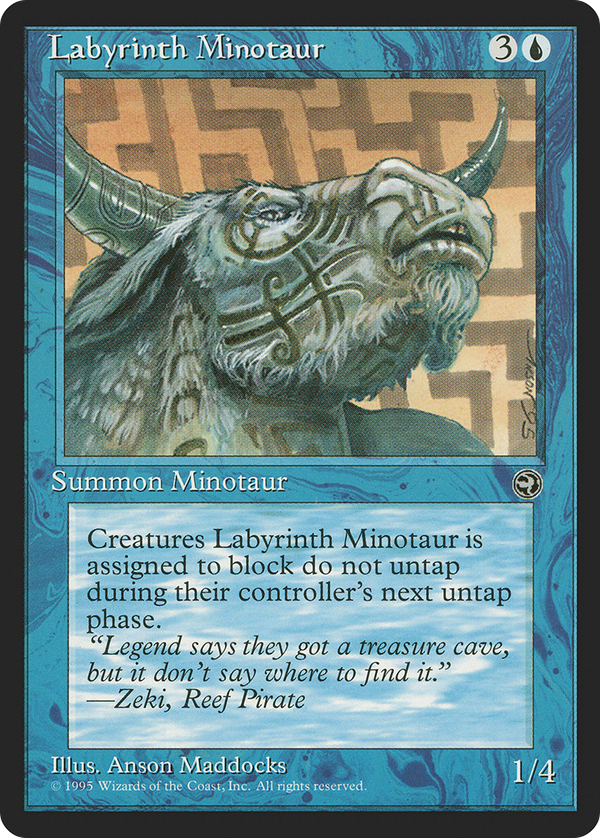
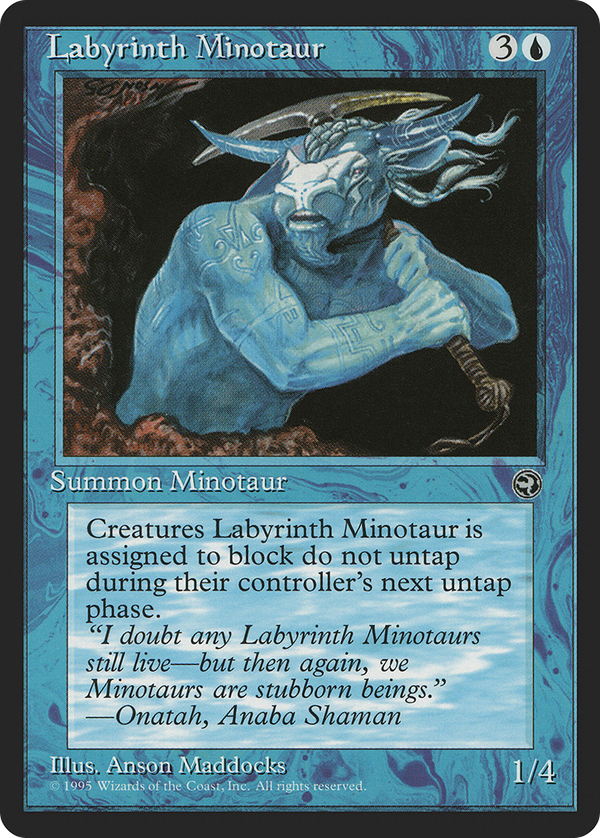
Labyrinth Minotaur


A defensive wall with a punitive wrinkle: the 1/4 body sits behind the front line and absorbs an attacker, but the block itself taxes the creature it stops, denying it the next untap step. That clause is the design idea worth pausing on. Most early blockers simply traded toughness for survival, soaking a hit and resetting each turn. This one converts a block into tempo, turning a single combat exchange into a forced idle turn for whatever it meets in combat. The rhythm it imposes is asymmetric: an attacker that crashes into the minotaur stays tapped through its next untap, so it can only threaten the red zone every other turn while the blocker recovers each cycle. The toughness is the load-bearing stat. At four, it survives most of what an early aggressor can throw at it, which is what lets the tap effect recur across multiple combats rather than fire once and die. The flavor reads cleanly off the rules, too; a creature that wanders into the labyrinth comes out disoriented and a step behind, which is exactly what the untap-denial models. It is a slow, attrition-minded piece from an era that prized those, more interested in grinding an opponent's offense down to half-speed than in ending games.