Kyoshi Village
A dual land that eats itself for a card belongs to a lineage of utility duals that trade a turn of speed for late-game insurance, folding two jobs into a single slot. Early, it fixes for a green-white deck; later, once the board has settled and the spare land in hand has gone dead, it sacrifices for a fresh card. The four-mana buyback on the draw is what stops it from simply outclassing a plain tapped dual: you pay real mana and give up a land drop's worth of permanence to convert surplus into gas. That trade is the design's central pull. You want it in your opening hand for the fixing and want it in your late game for the card, and spending it for the card gives up the fixing it was providing, so timing the sacrifice becomes a real decision rather than an automatic play. Entering tapped is the standard toll two-color lands pay for their flexibility, and it bites a little harder here because the card most wants to be on the battlefield early, doing its fixing job when color-screw hurts most, which is exactly when the tapped turn costs you tempo.
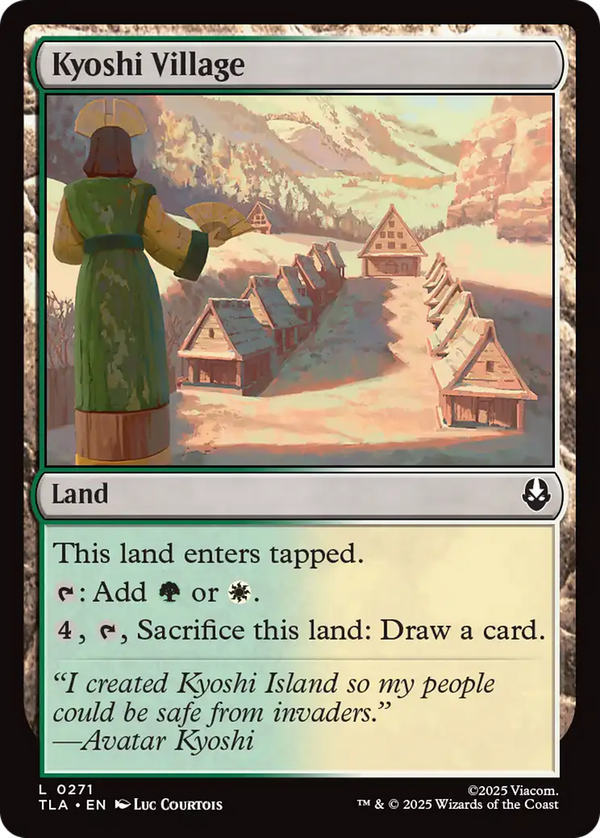
Rules text
 : Add
: Add  or
or  .
.
 , , Sacrifice this land: Draw a card.