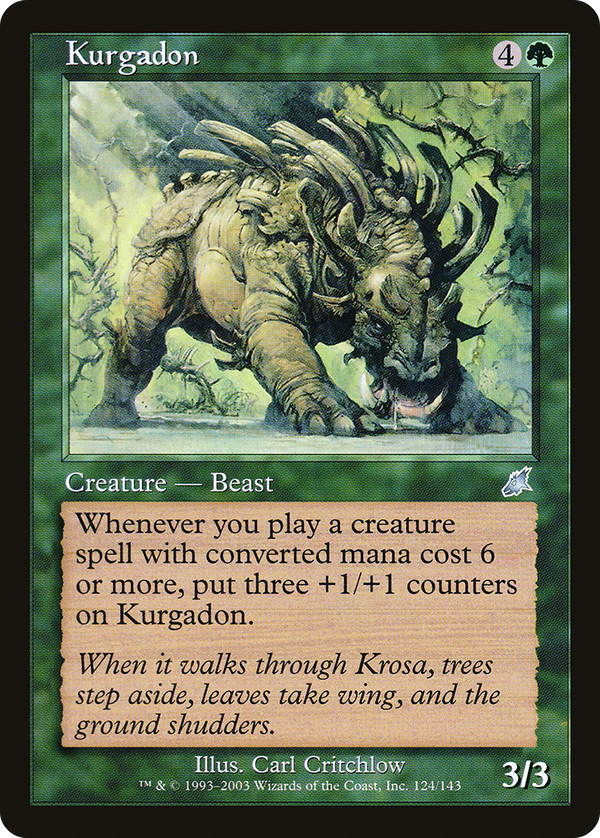
Kurgadon


The reward structure here is deliberately backloaded: a 3/3 for five does nothing on its own, but each big creature spell you cast stacks on three counters at once, jumping it from 3/3 to 6/6 to 9/9 in a hurry. The clever part is the trigger keying on the cast rather than the resolution, so even a giant countered on the stack still pumps it: you are paid for committing the mana, not for the threat sticking. That places the design squarely in an early-era fascination with the top of the curve, an engine built to cash in once you start chaining haymakers. The trouble, then as now, is that a deck full of expensive drops wants its payoff to affect the board the turn it lands, and a Beast that only grows asks you to survive long enough to cast multiple costly spells with a do-nothing five-drop already sitting in play. The counters arrive with no haste, no protection, no evasion to make them matter, so the math only starts paying out after the rest of your hand has already taken the game somewhere expensive. It is a payoff that rewards the exact plan least likely to need a 9/9 ground creature to close: by the time the Kurgadon is huge, the giants doing the triggering have usually decided things first.