Krile Baldesion


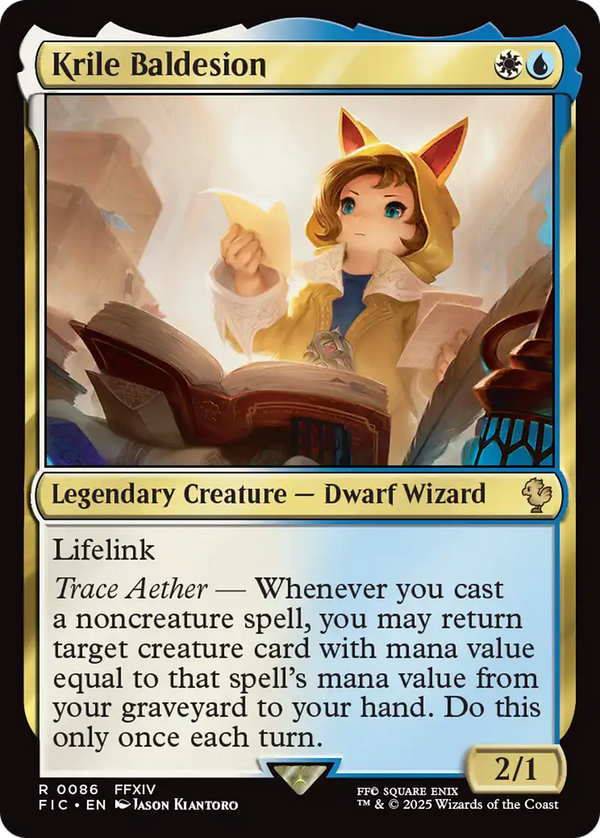
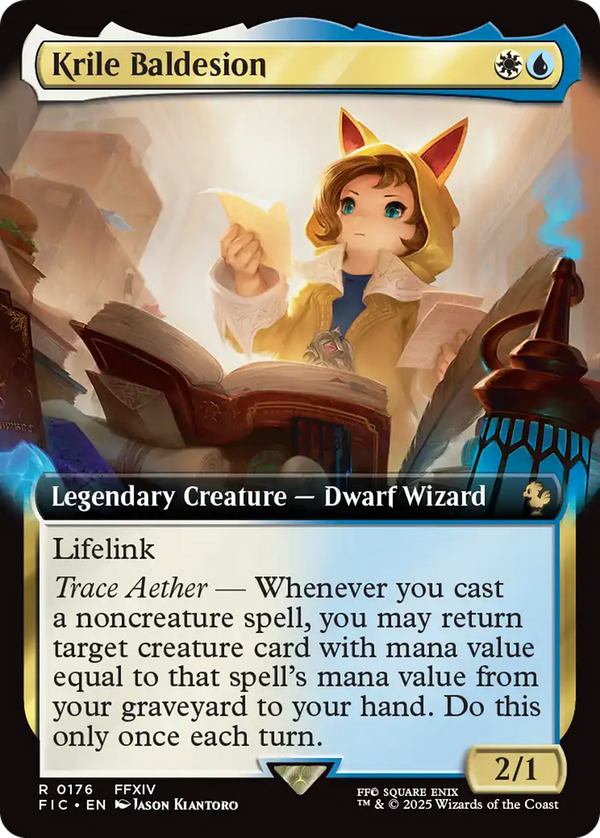
The mana-value symmetry is the whole engine, and it is a strange, self-limiting one. Most graveyard recursion in white and blue keys off creature type, power, or a flat mana-value ceiling; this instead pins recursion to the exact cost of the spell you just cast, once per turn. Cast a one-mana cantrip, get back a one-drop; cast a five-mana wrath, get back a five-drop. That constraint forces a deckbuilding shape you rarely see: a curve of noncreature spells that intentionally mirrors the curve of the creatures you want to recur, so every spell has a target waiting for it. The Trace Aether trigger reads like a value ability but plays like a puzzle, rewarding decks that treat mana value as a shared resource across two card types rather than an incidental number. The lifelink on a 2/1 body is almost incidental to the engine: it does nothing to protect a fragile Wizard from removal or combat, but it turns each attack into a small drain and stacks with the tempo of chaining spells, buying life in the grindy games where the recursion loop is doing its slow work. What she asks for is not raw power but alignment: the payoff scales with how deliberately the two halves of the deck are tuned to the same numbers, and it falls apart the moment those costs drift out of sync.