Knight of the Tusk


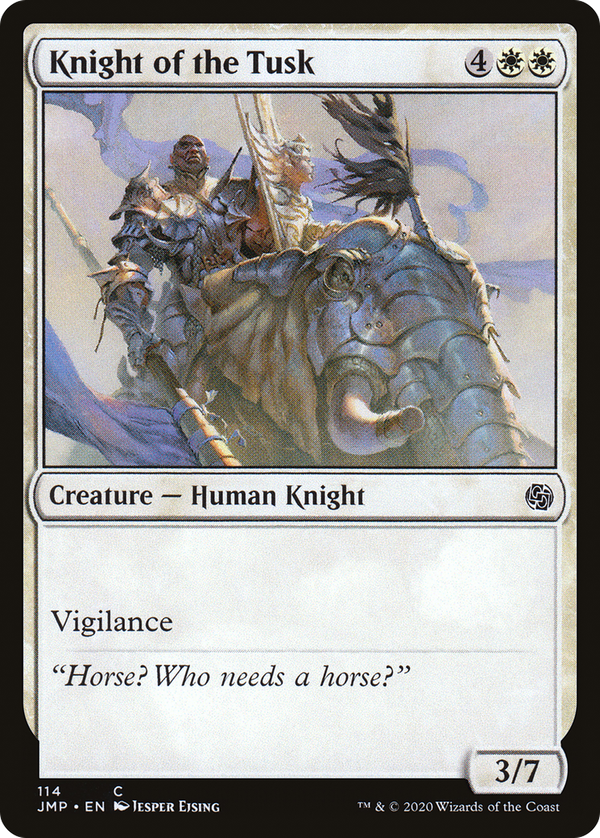
Seven toughness for three power is a lopsided body by design: this is a wall that also happens to attack, and vigilance is the mechanic that lets it do both without choosing. The whole appeal lives in that clause. On defense, seven toughness turns aside nearly everything the ground has to offer, and because swinging never taps it, the wall stays intact while the Knight still chips in three each turn. That is vigilance doing exactly the job it was invented for: dissolving the attack-or-block choice into both. The cost of that reliability is the rate. Three power at this price is a steep tax, and no amount of toughness closes a game by itself; a defender that never dies is still a defender. So the card sits where white decks put a stabilizing top-end rather than a threat, a curve-capper for a board that needs to stop dying more than it needs to start winning. The Human and Knight lines gesture at tribal payoffs without leaning on either, which is the honest read: a clean, replacement-level defensive common whose ceiling is a good blocker that occasionally attacks for free.