Kitsune Bonesetter


The activation clause is the whole design statement: you can only prevent damage while you hold more cards than each opponent, which makes the body's job conditional on a board state most decks have to work to maintain. This is a card-advantage payoff disguised as a damage preventer, built for a controlling white shell that hoards cards and burns the surplus as fuel. The mana value barely matters once the cleric is down; the ability asks only for a tap, so as long as the hand-size requirement holds it works as a shield that resets each turn. That gating is the design tension in miniature: a 0/1 that prevented three damage on demand every turn would be an absurd defensive wall, so the price is paid less in the tap itself than in the deckbuilding constraint, the demand that you stay ahead on cards or watch the cleric go inert. The tap keeps it honest at the table level (one creature protected per turn, not the whole board), but the real lock is the threshold, an early-era approach that ties a creature's relevance directly to whether you are winning the attrition war. Win that war and the bonesetter is a recurring fog on a single creature, refreshed each turn for the cost of a tap; fall behind and it is a 0/1 that does nothing, which is exactly the point.
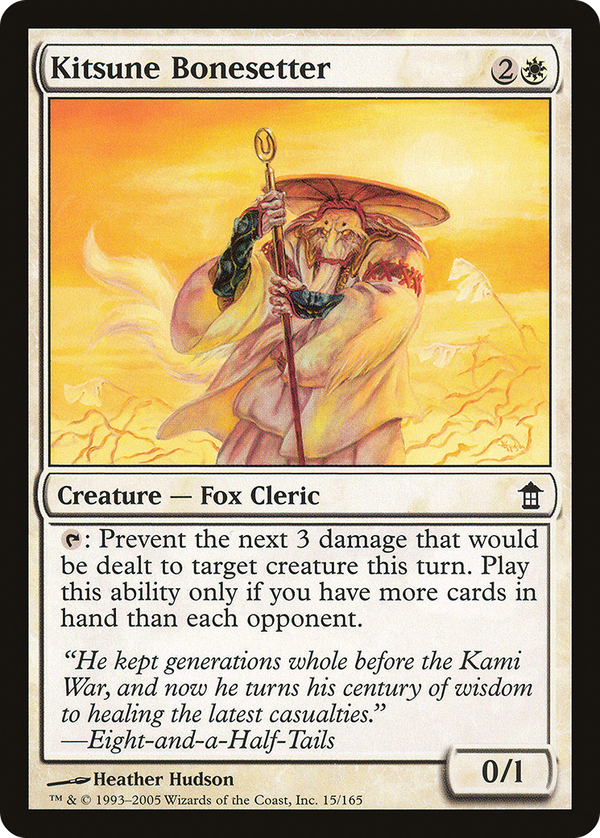
Rules text
 : Prevent the next 3 damage that would be dealt to target creature this turn. Activate only if you have more cards in hand than each opponent.