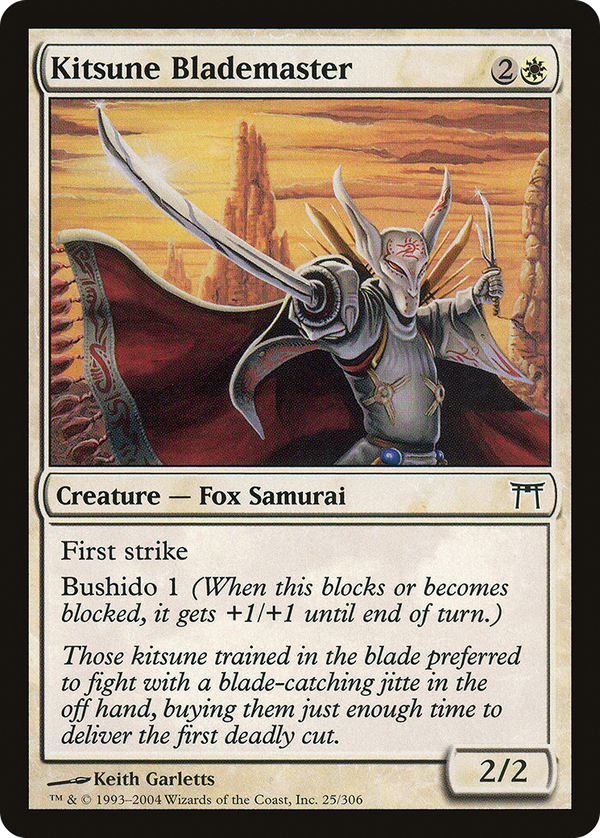
Kitsune Blademaster


Stacking bushido on top of first strike is a small but pointed bit of combat math. First strike already lets a 2/2 kill anything with two or less toughness before it can swing back; bushido adds another point in the exact combat where it matters, so the creature deals its three damage first and is a 3/3 when it does it. The two keywords compound rather than overlap: the first-strike hit lands at a power the defender never accounted for, and against a wider attacker the toughness bump keeps the Blademaster alive to do it again. The cost of all this is that it is purely reactive. Bushido only fires when the fox blocks or is blocked, so a creature that swings into open air or trades into removal is just a 2/2 with first strike, no better than the rate suggests. The design rewards the player who controls when combat happens, holding the Blademaster as a defensive wall that punishes attackers and as an attacker that dares blocks the opponent cannot profitably make. The Samurai-and-bushido era built its identity on this principle: combat ability paid out in the fight itself rather than banked up front, so a modest body can dominate a board as long as the other player keeps choosing to swing into it.