Kindle the Inner Flame


The token copy is priced as a temporary body: it enters with haste and dies at the end step, so the entire value of the spell is compressed into one turn of combat and enters-the-battlefield triggers. That framing tells you exactly what to point it at. Copy something with a devastating ETB and you get a second one now; copy your best attacker and you get a hasted swing before the clone evaporates. The end-step sacrifice is the tax that stops this from being a permanent doubling, but it also quietly stops being a drawback in decks that want creatures dying anyway, feeding sacrifice triggers on the way out rather than losing the body to removal.
The flashback is what ties the card to an Elemental shell. The graveyard cast still asks for  , but it stacks a tribal gate on top: Behold three Elementals, paid either by choosing Elementals you already control or by revealing Elemental cards from your hand. Nothing gets tapped or committed; you are showing the card an allegiance, not spending a resource. That second option is the wrinkle that turns a soft tribal condition into a real build-around, since a midrange Elemental shell can satisfy it from hand without over-extending onto a board that a sweeper would punish. Behold does the structural work that delve does elsewhere, translating a commitment to the creature type the card names into access to a second casting; the mana is still owed, but the tribe supplies the gate.
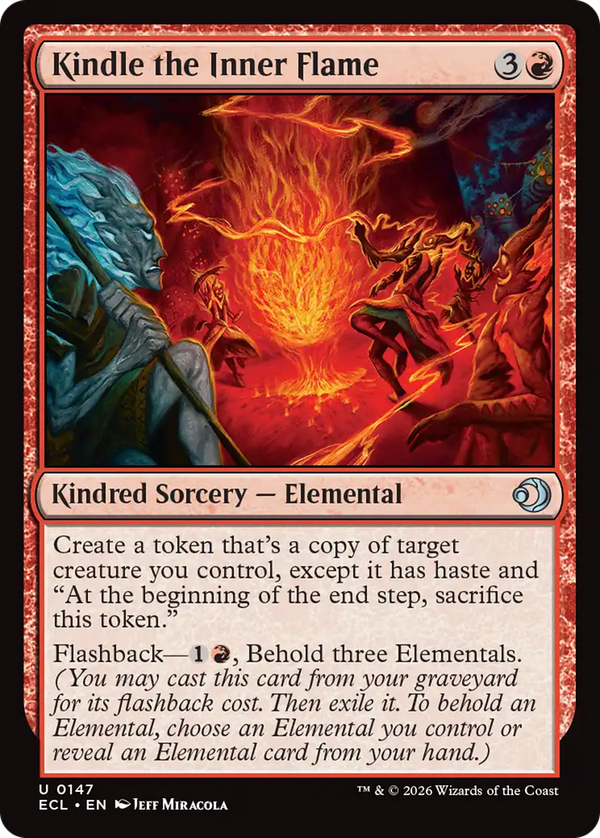
Rules text
, Behold three Elementals. (You may cast this card from your graveyard for its flashback cost. Then exile it. To behold an Elemental, choose an Elemental you control or reveal an Elemental card from your hand.)