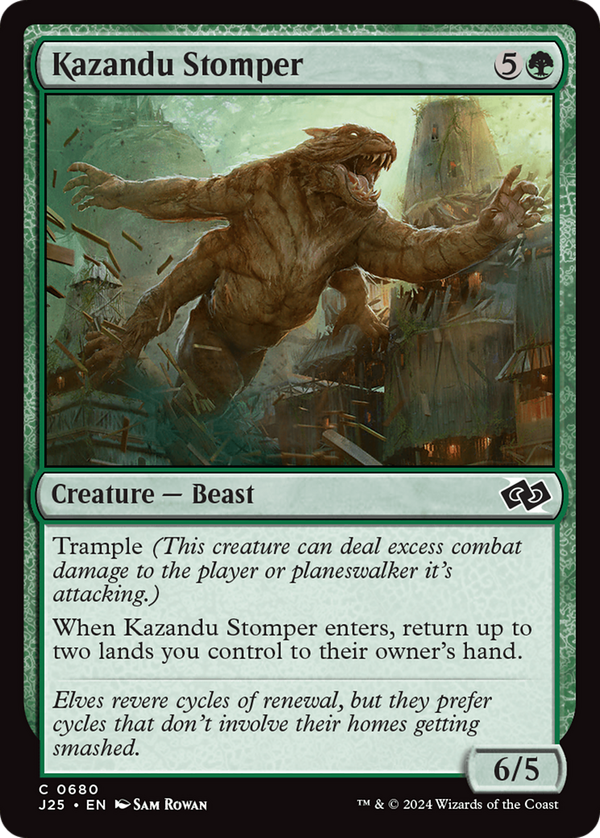
Kazandu Stomper


Look twice at a plain 6/5 trampler and the enters-the-battlefield trigger is what earns the second glance: returning up to two lands to hand reads as a drawback, and often is when you cast it on curve and set back your own development. Fold that same bounce into a deck built to replay lands, though, and the trigger inverts. Two lands to hand is two more landfall triggers on the way, or two more chances to re-fire an enters-the-battlefield land effect. The "up to two" clause carries the whole design: you can return zero and simply have a large body, which means the cost is never forced on you. That optionality is what makes the card function on two axes at once. When you need a beater, you have a 6/5 and nothing more; when you have a landfall payoff waiting, the same body becomes the engine input that feeds it. Trample is the closing half of the package, letting six power press through a lone chump blocker rather than stalling behind it. The self-bounce clause is a familiar green tax for oversized bodies, a shape that turns what looks like a tempo cost into a resource loop the moment the deck is built to catch it.