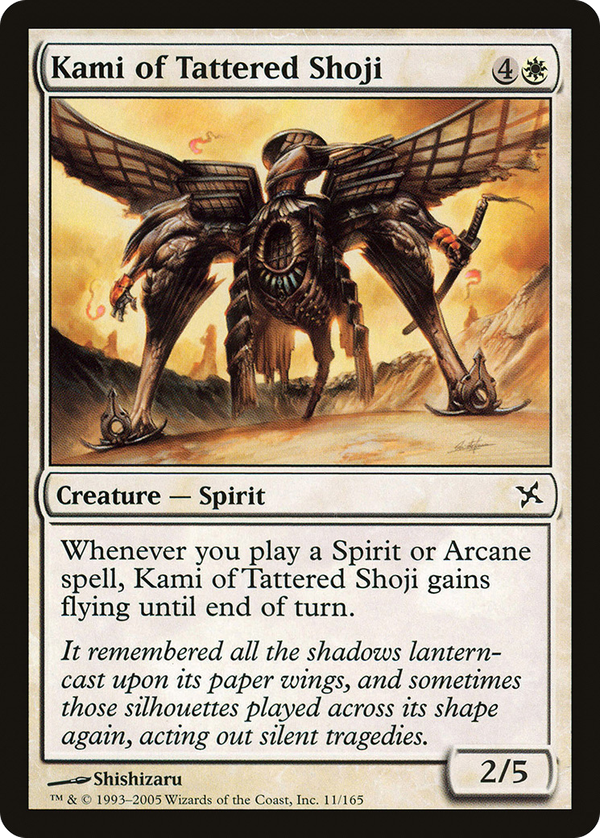
Kami of Tattered Shoji


Five toughness parks this in front of almost anything the ground throws at it, which is the easy part of the design and the part that does nothing toward winning. A flat wall is a speed bump, never a clock, so the evasion clause solves the payoff-that-does-nothing-alone problem: a creature relevant only when you are already ahead is dead cardboard, and the answer here is to fold the reward into casts the deck makes anyway. There is no separate evasion package and no extra card spent. The trigger rides on the deck's natural sequencing, so the same body that holds the line vaults over it the moment the spell-matters engine turns over, converting a board-stall into damage in the air. The reward is modest on purpose; flying for a single turn reads as negligible in isolation and only earns its keep inside the tribal-and-spells shell it was built to support, where casts come constant and the skies stay empty. What makes the design clean is that both halves use the same five-toughness frame: the wall that buys time while the engine assembles becomes the finisher once it has, with no asking and no commitment beyond the spells you wanted to cast regardless.